

-
1 ослабевшая пружина
1) Automobile industry: weak spring2) Automation: light springУниверсальный русско-английский словарь > ослабевшая пружина
-
2 слабая пружина
1) Mechanics: light spring2) Automation: weak spring -
3 пружина малой жесткости
Automobile industry: light springУниверсальный русско-английский словарь > пружина малой жесткости
-
4 БИБЛИОГРАФИЯ
Мы приняли следующие сокращения для наиболее часто упоминаемых книг и журналов:IJP - International Journal of Psycho-analysisJAPA - Journal of the American Psychoanalytic AssociationSE - Standard Edition of the Complete Psychological Works of Sigmund Freud, ed. James Strachey (London: Hogarth Press and the Institute of Psycho-Analysis, 1953—74.)PSOC - Psychoanalytic Study of the Child (New Haven: Yale University Press)PQ - Psychoanalytic QuarterlyWAF - The Writings of Anna Freud, ed. Anna Freud (New York: International Universities Press, 1966—74)PMC - Psychoanalysis The Major Concepts ed. Burness E. Moore and Bernard D. Fine (New Haven: Yale University Press)\О словаре: _about - Psychoanalytic Terms and Concepts\1. Abend, S. M. Identity. PMC. Forthcoming.2. Abend, S. M. (1974) Problems of identity. PQ, 43.3. Abend, S. M., Porder, M. S. & Willick, M. S. (1983) Borderline Patients. New York: Int. Univ. Press.4. Abraham, K. (1916) The first pregenital stage of libido. Selected Papers. London, Hogarth Press, 1948.5. Abraham, K. (1917) Ejaculatio praecox. In: selected Papers. New York Basic Books.6. Abraham, K. (1921) Contributions to the theory of the anal character. Selected Papers. New York: Basic Books, 1953.7. Abraham, K. (1924) A Short study of the development of the libido, viewed in the light of mental disorders. In: Selected Papers. London: Hogarth Press, 1927.8. Abraham, K. (1924) Manic-depressive states and the pre-genital levels of the libido. In: Selected Papers. London: Hogarth Press, 1949.9. Abraham, K. (1924) Selected Papers. London: Hogarth Press, 1948.10. Abraham, K. (1924) The influence of oral erotism on character formation. Ibid.11. Abraham, K. (1925) The history of an impostor in the light of psychoanalytic knowledge. In: Clinical Papers and Essays on Psychoanalysis. New York: Basic Books, 1955, vol. 2.12. Abrams, S. (1971) The psychoanalytic unconsciousness. In: The Unconscious Today, ed. M. Kanzer. New York: Int. Univ. Press.13. Abrams, S. (1981) Insight. PSOC, 36.14. Abse, D W. (1985) The depressive character In Depressive States and their Treatment, ed. V. Volkan New York: Jason Aronson.15. Abse, D. W. (1985) Hysteria and Related Mental Disorders. Bristol: John Wright.16. Ackner, B. (1954) Depersonalization. J. Ment. Sci., 100.17. Adler, A. (1924) Individual Psychology. New York: Harcourt, Brace.18. Akhtar, S. (1984) The syndrome of identity diffusion. Amer. J. Psychiat., 141.19. Alexander, F. (1950) Psychosomatic Medicine. New York: Norton.20. Allen, D. W. (1974) The Feat- of Looking. Charlottesvill, Va: Univ. Press of Virginia.21. Allen, D. W. (1980) Psychoanalytic treatment of the exhibitionist. In: Exhibitionist, Description, Assessment, and Treatment, ed. D. Cox. New York: Garland STPM Press.22. Allport, G. (1937) Personality. New York: Henry Holt.23. Almansi, R. J. (1960) The face-breast equation. JAPA, 6.24. Almansi, R. J. (1979) Scopophilia and object loss. PQ, 47.25. Altman, L. Z. (1969) The Dream in Psychoanalysis. New York: Int. Univ. Press.26. Altman, L. Z. (1977) Some vicissitudes of love. JAPA, 25.27. American Psychiatric Association. (1987) Diagnostic and Statistical Manual of Mental Disorders, 3d ed. revised. Washington, D. C.28. Ansbacher, Z. & Ansbacher, R. (1956) The Individual Psychology of Alfred Adler. New York: Basic Books.29. Anthony, E. J. (1981) Shame, guilt, and the feminine self in psychoanalysis. In: Object and Self, ed. S. Tuttman, C. Kaye & M. Zimmerman. New York: Int. Univ. Press.30. Arlow. J. A. (1953) Masturbation and symptom formation. JAPA, 1.31. Arlow. J. A. (1959) The structure of the deja vu experience. JAPA, 7.32. Arlow. J. A. (1961) Ego psychology and the study of mythology. JAPA, 9.33. Arlow. J. A. (1963) Conflict, regression and symptom formation. IJP, 44.34. Arlow. J. A. (1966) Depersonalization and derealization. In: Psychoanalysis: A General Psychology, ed. R. M. Loewenstein, L. M. Newman, M. Schur & A. J. Solnit. New York: Int. Univ. Press.35. Arlow. J. A. (1969) Fantasy, memory and reality testing. PQ, 38.36. Arlow. J. A. (1969) Unconscious fantasy and disturbances of mental experience. PQ, 38.37. Arlow. J. A. (1970) The psychopathology of the psychoses. IJP, 51.38. Arlow. J. A. (1975) The structural hypothesis. PQ, 44.39. Arlow. J. A. (1977) Affects and the psychoanalytic situation. IJP, 58.40. Arlow. J. A. (1979) Metaphor and the psychoanalytic situation. PQ, 48.41. Arlow. J. A. (1979) The genesis of interpretation. JAPA, 27 (suppl.).42. Arlow. J. A. (1982) Problems of the superego concept. PSOC, 37.43. Arlow. J. A. (1984) Disturbances of the sense of time. PQ, 53.44. Arlow. J. A. (1985) Some technical problems of countertransference. PQ, 54.45. Arlow, J. A. & Brenner, C. (1963) Psychoanalytic Concepts and the Structural Theory, New York: Int. Univ. Press.46. Arlow, J. A. & Brenner, C. (1969) The psychopathology of the psychoses. IJP, 50.47. Asch, S. S. (1966) Depression. PSOC, 21.48. Asch, S. S. (1976) Varieties of negative therapeutic reactions and problems of technique. JAPA, 24.49. Atkins, N. (1970) The Oedipus myth. Adolescence, and the succession of generations. JAPA, 18.50. Atkinson, J. W. & Birch, D. (1970) The Dynamics of Action. New York: Wiley.51. Bachrach, H. M. & Leaff, L. A. (1978) Analyzability. JAPA, 26.52. Bacon, C. (1956) A developmental theory of female homosexuality. In: Perversions,ed, S. Lorand & M. Balint. New York: Gramercy.53. Bak, R. C. (1953) Fetishism. JAPA. 1.54. Bak, R. C. (1968) The phallic woman. PSOC, 23.55. Bak, R. C. & Stewart, W. A. (1974) Fetishism, transvestism, and voyeurism. An American Handbook of Psychiatry, ed. S. Arieti. New York: Basic Books, vol. 3.56. Balint, A. (1949) Love for mother and mother-love. IJP, 30.57. Balter, L., Lothane, Z. & Spencer, J. H. (1980) On the analyzing instrument, PQ, 49.58. Basch, M. F. (1973) Psychoanalysis and theory formation. Ann. Psychoanal., 1.59. Basch, M. F. (1976) The concept of affect. JAPA, 24.60. Basch, M. F. (1981) Selfobject disorders and psychoanalytic theory. JAPA, 29.61. Basch, M. F. (1983) Emphatic understanding. JAPA. 31.62. Balldry, F. Character. PMC. Forthcoming.63. Balldry, F. (1983) The evolution of the concept of character in Freud's writings. JAPA. 31.64. Begelman, D. A. (1971) Misnaming, metaphors, the medical model and some muddles. Psychiatry, 34.65. Behrends, R. S. & Blatt, E. J. (1985) Internalization and psychological development throughout the life cycle. PSOC, 40.66. Bell, A. (1961) Some observations on the role of the scrotal sac and testicles JAPA, 9.67. Benedeck, T. (1949) The psychosomatic implications of the primary unit. Amer. J. Orthopsychiat., 19.68. Beres, C. (1958) Vicissitudes of superego functions and superego precursors in childhood. FSOC, 13.69. Beres, D. Conflict. PMC. Forthcoming.70. Beres, D. (1956) Ego deviation and the concept of schizophrenia. PSOC, 11.71. Beres, D. (1960) Perception, imagination and reality. IJP, 41.72. Beres, D. (1960) The psychoanalytic psychology of imagination. JAPA, 8.73. Beres, D. & Joseph, E. D. (1965) Structure and function in psychoanalysis. IJP, 46.74. Beres, D. (1970) The concept of mental representation in psychoanalysis. IJP, 51.75. Berg, M D. (1977) The externalizing transference. IJP, 58.76. Bergeret, J. (1985) Reflection on the scientific responsi bilities of the International Psychoanalytical Association. Memorandum distributed at 34th IPA Congress, Humburg.77. Bergman, A. (1978) From mother to the world outside. In: Grolnick et. al. (1978).78. Bergmann, M. S. (1980) On the intrapsychic function of falling in love. PQ, 49.79. Berliner, B. (1966) Psychodynamics of the depressive character. Psychoanal. Forum, 1.80. Bernfeld, S. (1931) Zur Sublimierungslehre. Imago, 17.81. Bibring, E. (1937) On the theory of the therapeutic results of psychoanalysis. IJP, 18.82. Bibring, E. (1941) The conception of the repetition compulsion. PQ, 12.83. Bibring, E. (1953) The mechanism of depression. In: Affective Disorders, ed. P. Greenacre. New York: Int. Univ. Press.84. Bibring, E. (1954) Psychoanalysis and the dynamic psychotherapies. JAPA, 2.85. Binswanger, H. (1963) Positive aspects of the animus. Zьrich: Spring.86. Bion Francesca Abingdon: Fleetwood Press.87. Bion, W. R. (1952) Croup dynamics. IJP, 33.88. Bion, W. R. (1961) Experiences in Groups. London: Tavistock.89. Bion, W. R. (1962) A theory of thinking. IJP, 40.90. Bion, W. R. (1962) Learning from Experience. London: William Heinemann.91. Bion, W. R. (1963) Elements of Psychoanalysis. London: William Heinemann.92. Bion, W. R. (1965) Transformations. London: William Heinemann.93. Bion, W. R. (1970) Attention and Interpretation. London: Tavistock.94. Bion, W. R. (1985) All My Sins Remembered, ed. Francesca Bion. Adingdon: Fleetwood Press.95. Bird, B. (1972) Notes on transference. JAPA, 20.96. Blanck, G. & Blanck, R. (1974) Ego Psychology. New York: Columbia Univ. Press.97. Blatt, S. J. (1974) Levels of object representation in anaclitic and introjective depression. PSOC, 29.98. Blau, A. (1955) A unitary hypothesis of emotion. PQ, 24.99. Bleuler, E. (1911) Dementia Praecox or the Group of Schizophrenias. New York: Int. Univ. Press, 1951.100. Blos, P. (1954) Prolonged adolescence. Amer. J. Orthopsychiat., 24.101. Blos, P. (1962) On Adolescence. New York: Free Press.102. Blos, P. (1972) The epigenesia of the adult neurosis. 27.103. Blos, P. (1979) Modification in the traditional psychoanalytic theory of adolescent development. Adolescent Psychiat., 8.104. Blos, P. (1984) Son and father. JAPA_. 32.105. Blum, G. S. (1963) Prepuberty and adolescence, In Studies ed. R. E. Grinder. New York: McMillan.106. Blum, H. P. Symbolism. FMC. Forthcoming.107. Blum, H. P. (1976) Female Psychology. JAPA, 24 (suppl.).108. Blum, H. P. (1976) Masochism, the ego ideal and the psychology of women. JAPA, 24 (suppl.).109. Blum, H. P. (1980) The value of reconstruction in adult psychoanalysis. IJP, 61.110. Blum, H. P. (1981) Forbidden quest and the analytic ideal. PQ, 50.111. Blum, H. P. (1983) Defense and resistance. Foreword. JAFA, 31.112. Blum, H. P., Kramer, Y., Richards, A. K. & Richards, A. D., eds. (1988) Fantasy, Myth and Reality: Essays in Honor of Jacob A. Arlow. Madison, Conn.: Int. Univ. Press.113. Boehm, F. (1930) The femininity-complex In men. IJP,11.114. Boesky, D. Structural theory. PMC. Forthcoming.115. Boesky, D. (1973) Deja raconte as a screen defense. PQ, 42.116. Boesky, D. (1982) Acting out. IJP, 63.117. Boesky, D. (1986) Questions about Sublimation In Psychoanalysis the Science of Mental Conflict, ed. A. D. Richards & M. S. Willick. Hillsdale, N. J.: Analytic Press.118. Bornstein, B. (1935) Phobia in a 2 1/2-year-old child. PQ, 4.119. Bornstein, B. (1951) On latency. PSOC, 6.120. Bornstein, M., ed. (1983) Values and neutrality in psychoanalysis. Psychoanal. Inquiry, 3.121. Bowlby, J. (1960) Grief and morning in infancy and early childhood. PSOC. 15.122. Bowlby, J. (1961) Process of mourning. IJP. 42.123. Bowlby, J. (1980) Attachment and Loss, vol. 3. New York: Basic Books.124. Bradlow, P. A. (1973) Depersonalization, ego splitting, non-human fantasy and shame. IJP, 54.125. Brazelton, T. B., Kozlowsky, B. & Main, M. (1974) The early motherinfant interaction. In: The Effect of the Infant on Its Caregiver, ed. M. Lewis & L. Rosenblum New York Wiley.126. Brenner, C. (1957) The nature and development of the concept of repression in Freud's writings. PSOC, 12.127. Brenner, C. (1959) The masochistic character. JAPA, 7.128. Brenner, C. (1973) An Elementary Textbook of Psycho-analysis. New York Int. Univ. Press.129. Brenner, C. (1974) On the nature and development of affects PQ, 43.130. Brenner, C. (1976) Psychoanalytic Technique and Psychic Conflict. New York: Int. Univ. Press.131. Brenner, C. (1979) The Mind in Conflict. New York: Int. Univ. Press.132. Brenner, C. (1979) Working alliance, therapeutic alliance and transference. JAPA, 27.133. Brenner, C. (1981) Defense and defense mechanisms. PQ, 50.134. Brenner, C. (1983) Defense. In: the Mind in Conflict. New York Int. Univ. Press.135. Bressler, B. (1965) The concept of the self. Psychoanalytic Review, 52.136. Breuer, J. & Freud, S. (1983—95) Studies on Hysteria. SE, 3.137. Breznitz, S., ed. (1983) The Denial of Stress. New York: Int. Univ. Press.138. Brody, S. (1964) Passivity. New York: Int. Univ. Press.139. Brown, H. (1970) Psycholinquistics. New York: Free Press.140. Bruner, J. S. (1964) The course of cognitive growth. Amer. Psychologist. 19.141. Bruner, J., Jolly, A. & Sylva, K. (1976) Play. New York Basic Books.142. Bruner, J. E., Olver, R. R. &Greenfield, P. M. (1966) Studies in Cognitive Growth. New York: Wiley.143. Buie, D H. (1981) Empathy. JAPA, 29.144. Burgner, M. & Edgeumble, R. (1972) Some problems in the conceptualization of early object relationships. PSOC, 27.145. Call, J. ed. (1979) Basic Handbook of Child Psychiatry. New York: Basic Books.146. Carroll, G. (1956) Language, Thought and Reality. Cambridge & London: M. I. T. Press & John Wiley.147. Cavenar, J. O. & Nash, J. L. (1976) The effects of Combat on the normal personality. Comprehensive Psychiat., 17.148. Chassequet-Smirgel, J. (1978) Reflections on the connection between perversion and sadism. IJP, 59.149. Chomsky, N. (1978) Language and unconscious knowledge. In: Psychoanalysis and Language, ed. J. H. Smith. New Haven: Yale Univ. Press, vol. 3.150. Clower, V. (1975) Significance of masturbation in female sexual development and function. In: Masturbation from Infancy to Senescence, ed. I. Marcus & J. Francis. New York: Int. Uni" Press.151. Coen, S. J. & Bradlow, P. A. (1982) Twin transference as a compromise formation. JAPA, 30.152. Compton, A. Object and relationships. PMC. Forthcoming.153. Cullen, W. (1777) First Lines of the Practice of Psysic. Edinburgh: Bell, Brandfute.154. Curtis, B. C. (1969) Psychoanalytic understanding and treatment of impotence. In: Sexual Function and Dysfunction, ed. P. J. Fink & V. B. O. Hummett. Philadelphia: F. A. Davis.155. Darwin, C. (1874) The Descent of Man. New York: Hurst.156. Davidoff-Hirsch, H. (1985) Oedipal and preoedipal phenomena. JAPA, 33.157. Davis, M. & Wallbridge, D. (1981) Boundary and Space. New York: Brunner-Mazel.158. Deutsch, H. (1932) Homosexuality in women. PQ, 1.159. Deutsch, H. (1934) Some forms of emotional disturbance and their relationship to schizophrenia. PQ, 11.160. Deutsch, H. (1937) Absence of grief. PQ, 6.161. Deutsch, H. (1942) Some forms of emotional disturbance and their relationship to schizophrenia. PQ, 11.162. Deutsch, H. (1955) The impostor. In: Neuroses and Character Types. New York: Int. Univ. Press, 1965.163. Devereux, G. (1953) Why Oedipus killed Lains. IJP, 34.164. Dewald, P. (1982) Psychoanalytic perspectives On resistance. In: resistance, Psychodynamics. and Behavioral Approaches, ed. P. Wachtel. New York: Plenum Press.165. Dickes, R. (1963) Fetishistic behavior. JAPA. 11.166. Dickes, R. (1965) The defensive function of an altered state of consciousness. JAPA, 13.167. Dickes, R. (1967) Severe regressive disruption of the therapeutic alliance. JAPA, 15.168. Dickes, R. (1981) Sexual myths and misinformation. In: Understanding Human Behaviour in Health and Illness, ed. R. C. Simon & H. Pardes. Baltimore: Williams & Wilkins.169. Dorpat, T. L. (1985) Denial and Defense in the Therapeutic Situation. New York: Jason Aronson.170. Downey, T. W. (1978) Transitional phenomena in the analysis of early adolescent males. PSOC, 33.171. Dunbar, F. (1954) Emotions and Bodily Functions. New York: Columbia Univ. Press.172. Easson, W. M. (1973) The earliest ego development, primitive memory traces, and the Isakower phenomenon. PQ, 42.173. Edelheit, H. (1971) Mythopoiesis and the primal scene. Psychoanal. Study Society, 5.174. Edgcumbe, R. & Burgner, M. (1972) Some problems in the conceptualization of early object relation ships, part I. PSOC, 27.175. Edgcumbe, R. & Burgner, M. (1975) The phallicnarcissistic phase. PSOC, 30.176. Eidelberg, L. (1960) A third contribution to the study of slips of the tongue. IJP, 41.177. Eidelberg, L. (1968) Encyclopedia of Psychoanalysis. New York: The Free Press; London: Collier-MacMillan.178. Eissler, K. R. (1953) The effect of the structure of the ego on psychoanalytic technique. JAPA, 1.179. Ellenberg, H. F. (1970) The Discovery of the Unconscious. New York: Basic Books.180. Emde, R. N. (1980) Toward a psychoanalytic theory of affect: I. & G. H. Pollock. Washington NYMH.181. Emde R., Gaensbaner, T. & Harmon R. (1976) Emotional Expression in Infancy. New York: Int. Univ. Press.182. Erode R. & Harmon, R. J. (1972) Endogenous and exogenous smiling systems in early infancy. J. Amer. Acad. Child Psychiat., 11.183. Engel, G. L. (1962) Psychological Development in Health and Disease. New York Saunders.184. Engel, G. L. (1967) Psychoanalytic theory of somatic disorder. JAPA, 15.185. Engel, G. L. (1968) A reconsideration of the role of conversion in somatic disease. Compr. Psychiat., 94.186. English, H. B. & English, A. C. (1958) A comprehensive Dictionary of Psychological and Psychoanalytical Terms. New York: David McKay.187. Erard, R. (1983) New wine in old skins. Int. Rev. Psychoanal., 10.188. Erdelyi, M. H. (1985) Psychoanalysis. New York: W. H. Freeman.189. Erikson, E. H. (1950) Childhood and Society. New York: Norton.190. Erikson, E. H. (1956) The concept of ego identity. JAPA, 4.191. Erikson, E. H. (1956) The problem of ego identity. JAPA, 4.192. Esman, A. H. (1973) The primal scene. PSOC, 28.193. Esman, A. H. (1975) The Psychology of Adolescence. New York: Int. Univ. Press.194. Esman, A. H. (1979) Some reflections on boredom. JAPA, 27.195. Esman, A. H. (1983) The "stimulus barrier": a review and reconsideration. PSOC, 38.196. Fairbairn, W. R. D. (1952) Psychoanalytic Studies of the Personality. London: Routledge & Kegan Paul.197. Fairbairn, W. R. D. (1954) An Object-Relations Theory of the Personality. New York: Basic Books.198. Fairbairn, W. R. D. (1963) Synopsis of an Object-Relations theory of the personality. IJP, 44.199. Fawcett, J., Clark, D. C., Scheftner, W. H. & Hedecker, D. (1983) Differences between anhedonia and normal hedonic depressive states. Arch. Gen. Psychiat., 40.200. Fenichel, O. (1934) On the psychology of boredom. Collected Papers. New York: Norton, 1953, vol. 1.201. Fenichel, O. (1941) Problems of Psychoanalytic Technique. Albany, N. Y.: Psychoanalytic Quaterly.202. Fenichel, O. (1945) Character disorders. In: The Psychoanalytic Theory of the Neurosis. New York: Norton.203. Fenichel, O. (1945) The Psychoanalytic Theory of Neurosis New York: Norton.204. Fenichel, O. (1954) Ego strength and ego weakness. Collected Papers. New York: Norton, vol. 2.205. Ferenczi, S. (1909) Introjection and transference. In: Sex in Psychoanalysis. New York: Basic Books.206. Ferenczi, S. (191617) Disease or patho-neurosis. The Theory and Technique of Psychoanalysis. London: Hogarth Press, 1950.207. Ferenczi, S. (1925) Psychoanalysis of sexual habits. In: The Theory and Technique of Psychoanalysis. New York: Basic Books.208. Fine, B. D., Joseph, E. D. & Waldhorn, H. F., eds. (1971) Recollection and Reconstruction in Psychoanalysis. Monograph 4, Kris Study Group. New York: Int. Univ. Press.209. Fink, G. (1967) Analysis of the Isakower phenomenon. JAPA, 15.210. Fink, P. J. (1970) Correlation between "actual" neurosis and the work of Masters and Johson. P. Q, 39.211. Finkenstein, L. (1975) Awe premature ejaculation. P. Q, 44.212. Firestein, S. K. (1978) A review of the literature. In: Termination in Psychoanalysis. New York: Int. Univ. Press.213. Fisher, C. et. al. (1957) A study of the preliminary stages of the construction of dreams and images. JAPA, 5.214. Fisher, C. et. al. (1968) Cycle of penile erection synchronous with dreaming (REM) sleep. Arch. Gen. Psychiat., 12.215. Fliess, R. (1942) The metapsychology of the analyst. PQ, 12.216. Fliess, R. (1953) The Revival of Interest in the Dream. New York: Int. Univ. Press.217. Fodor, N. & Gaynor, F. (1950) Freud: Dictionary of Psycho-analysis. New York: Philosophical Library.218. Fordham, M. (1969) Children as Individuals. London: Hodder & Stoughton.219. Fordham, M. (1976) The Self and Autism. London: Academic Press.220. Fraiberg, S. (1969) Object constancy and mental representation. PSOC, 24.221. Frank, A. Metapsychology. PMS. Forthcoming.222. Frank, A. & Muslin, H. (1967) The development of Freud's concept of primal repression. PSOC, 22.223. Frank, H. (1977) Dynamic patterns for failure in college students. Can. Psychiat. Ass. J., 22.224. French, T. & Fromm, E. (1964) Dream Interpretation. New York: Basic Books.225. Freud, A. (1936) The Ego and the Mechanisms of Defense. New York Int. Univ. Press.226. Freud, A. (1951) Observations on child development. PSOC, 6.227. Freud, A. (1952) The mutual influences in the development of ego and id. WAF, 4.228. Freud, A. (1958) Adolescence. WAF, 5.229. Freud, A. (1962) Assessment of childhood disturbances. PSOC, 17.230. Freud, A. (1962) Comments on psychic trauma. In: Furst (1967).231. Freud, A. (1963) The concept of developmental lines. PSOC, 18.232. Freud, A. (1965) Assessment of pathology, part 2. WAF, 6.233. Freud, A. (1965) Normality and Pathology in Childhood. New York: Int. Univ. Press.234. Freud, A. (1970) The infantile neurosis. WAF, 7.235. Freud, A. (1971) Comments on aggression. IJP, 53.236. Freud, A. (1971) The infantile neurosis. PSOC, 26.237. Freud, A. (1981) Insight. PSOC, 36.238. Freud, S. (1887—1902) Letters to Wilhelm Fliess. New York: Basic Books, 1954.239. Freud, S. (1891) On the interpretation of the aphasias. SE, 3.240. Freud, S. (1893—95) Studies on hysteria. SE, 2.241. Freud, S. (1894) The neuropsychoses of defence. SE, 3.242. Freud, S. (1895) On the ground for detaching a particular syndrome from neurasthenia under the description "anxiety neurosis". SE, 3.243. Freud, S. (1895) Project for a scientific psychology. SE, 1.244. Freud, S. (1896) Draft K, Jameary 1, 1896, Neuroses of defense (A Christmas fairytale). In: Extracts from the Fliess papers (1892—99).245. Freud, S. (1896) Further remarks on the neuropsychosis of defense. SE, 3.246. Freud, S. (1896) Heredity and aetiology of neurosis. SE, 3.247. Freud, S. (1898) Sexuality in the aetiology of the neurosis. SE, 3.248. Freud, S. (1899) Screen memories. SE, 3.249. Freud, S. (1900) The interpretation of dreams. SE, 4—5.250. Freud, S. (1901) Childhood memories and screen memories SE, 6.251. Freud, S. (1901) On dreams. SE, 5.252. Freud, S. (1901) The psychopathology of everyday life. SE, 6.253. Freud, S. (1905) Fragments of an analysis of a case of hysteria. SE, 7.254. Freud, S. (1905) Jokes and their relation to the unconscious. SE, 8.255. Freud, S. (1905) Psysical (or mental) treatment. SE, 7.256. Freud, S. (1905) Three essays on the theory of sexuality. SE. 7.257. Freud, S. (1908) Character and anal erotism. SE, 9.258. Freud, S. (1908) On the sexual theories of children. SE, 9.259. Freud, S. (1908) Preface to Wilhelm Stekel's Nervous Anxiety-States and Their Treatment. SE, 9.260. Freud, S. (1909) Analysis of a phobia in a five-year-old boy. SE, 10.261. Freud, S. (1909) Family romances. SE, 9.262. Freud, S. (1909) Notes upon a case of obsessional neurosis. SE, 10.263. Freud, S. (1910) A special type of choice of object made by men. SE, 11.264. Freud, S. (1910) The autithentical meaning of primal words. SE, 11.265. Freud, S. (1910) The future prospects of psychoanalytic therapy. SE, 11.266. Freud, S. (1910) The psychoanalytic view of psychogenic disturbance of vision. SE, 11.267. Freud, S. (1911) Formulations on the two principles of mental functioning. SE, 12.268. Freud, S. (1911) Notes on a case of paranoia. SE, 12.269. Freud, S. (1911) Psychoanalytic notes on an autobiographical account of a case of paranoia. SE, 12.270. Freud, S. (1911—15) Papers on technique. SE, 12.271. Freud, S. (1912) Contribution to a discussion on masturbation. SE, 12.272. Freud, S. (1912) On the universal tendency to abasement in the sphere of love. SE, 11.273. Freud, S. (1912) The dynamics of transference. SE, 12.274. Freud, S. (1913) Editor's note The disposition to obsessional neurosis. SE, 12.275. Freud, S. (1913) On beginning the treatment. SE, 12.276. Freud, S. (1913) Totem and taboo. SE, 13.277. Freud, S. (1914) Fausse reconnaissance (deja reconte) in psychoanalytic treatment. SE, 13.278. Freud, S. (1914) Mourning and melancholia. SE, 15.279. Freud, S. (1914) Observations on transference love. SE, 12.280. Freud, S. (1914) On narcissism. SE. 14.281. Freud, S. (1914) On the history of the psychoanalytic movement. SE, 14.282. Freud, S. (1914) Remembering, repeating, and working-through. SE, 12.283. Freud, S. (1914—16) Some character types met with in psychoanalysis. (II) Those wrecked by success SE, 14.284. Freud, S. (1915) Das UnbewuЯte. Gesammelte Werke, 10.285. Freud, S. (1915) Instincts and their vicissitudes. SE, 14.286. Freud, S. (1915) Observation on transference-love. SE, I2.287. Freud, S. (1915) Repression. SE, 14.288. Freud, S. (1915) The unconscious. SE, 14.289. Freud, S. (1915—17) Introductory lectures on psychoanalysis. SE, 15 & 16.290. Freud, S. (1916) Introductory lectures on psychoanalysis. SE, 16.291. Freud, S. (1916) Some character types met with in psychoanalytic work. SE, 16.292. Freud, S. (1917) A metapsychological supplement to the theory of dreams. SE, 14.293. Freud, S. (1917) Introductory lectures on psychoanalysis. SE, 16.294. Freud, S. (1917) Mourning and melancholia. SE, 14.295. Freud, S. (1917) On transformations of instinct as exemplified in anal erotism. SE, 17.296. Freud, S. (1918) From the history of an infantile neurosis. SE, 17.297. Freud, S. (1919) "A child is being beaten". SE, 17.298. Freud, S. (1919) Lines of advance in psychoanalytic therapy. SE, 17.299. Freud, S. (1919) The uncanny. SE, 17.300. Freud, S. (1920) Beyond the pleasure principle. SE, 18.301. Freud, S. (1920) The Psychogenesis of a case of homosexuality in a woman. SE, 18.302. Freud, S. (1921) Group psychology and the analysis of the ego. SE, 18.303. Freud, S. (1923) The ego and the id. SE, 19.304. Freud, S. (1923) The infantile genital organization. SE, 19.305. Freud, S. (1924) A short account of psychoanalysis. SE, 19.306. Freud, S. (1924) Neurosis and psychosis. SE, 19.307. Freud, S. (1924) The dissolution of the Oedipus complex SE, 19.308. Freud, S. (1924) The economic problem of masochism. SE, 19.309. Freud, S. (1924) The loss of reality in neurosis and psychosis. SE, 19.310. Freud, S. (1925) Negation. SE, 19.311. Freud, S. (1925) Some psychical consequences of the anatomical distinction between the sexes. SE, 19.312. Freud, S. (1926) Inhibitions, symptoms and anxiety. SE, 20.313. Freud, S. (1926) The question of lay analysis. SE, 20.314. Freud, S. (1927) Fetishism. SE, 21.315. Freud, S. (1930) Civilization and its discontents. SE, 21.316. Freud, S. (1931) Female sexuality. SE, 21.317. Freud, S. (1931) Libidinal types. SE, 21.318. Freud, S. (1933) Femininity. SE, 22,.319. Freud, S. (1933) New introductory lectures on psycho-analysis. SE, 22.320. Freud, S. (1933) The psychology of women. New introductory lectures on psychoanalysis. SE, 22.321. Freud, S. (1936) A disturbance of memory on the Acropolis. SE, 22.322. Freud, S. (1937) Analysis terminable and interminable. SE, 23.323. Freud, S. (1937) Constructions in analysis. SE, 23.324. Freud, S. (1938) An outline on psychoanalysis. SE, 23.325. Freud, S. (1938) Splitting of the ego in the process of defense. SE, 23.326. Freud, S. (1939) Moses and monotheism. SE, 23.327. Freud, S. (1940) An outline of psychoanalysis. SE, 23.328. Frosch, J. (1966) A note on reality constancy. In: Psychoanalysis — A General Psychology, ed. R. M. Loewenstein, L. M. Newman, M. Schur & A. J. Solnit. New York: Int. Univ. Press.329. Frosch, J. (1967) Delusional fixity sense of conviction and the psychotic conflict. IJP, 48.330. Frosch, J. (1977) The relation between acting out and disorders of impulse control. Psychiatry, 40.331. Frosch, J. (1980) Neurosis and psychosis. In: The Course of Life, ed. S. J. Greenspan & G. H. Pollock. Washington, D. C.: National Institute of Health, vol. 3.332. Frosch, J. (1983) The Psychotic Process. New York: Int. Univ. Press.333. Furer, M. (1972) The history of the superego concept in psychoanalysis. In: Moral Value and the Superego concept in Psychoanalysis, ed. S. C. Fost. New York: Int. Univ. Press.334. Furman, E. (1974) A Child s Parent Dies. New Heaven: Yale Univ. Press.335. Furman, E. (1980) Transference and externalization. PSOC, 35.336. Furst, S. Trauma. PMC, Forthcoming.337. Furst, S. (1967) Psychic trauma. In: Psychic Trauma, ed. S. S. Furst. New York: Basic Books.338. Furst, S. (1978) The stimulus barrier and the pathogenecity of trauma. IJP, 59.339. Gaddini, R. (1978) Transitional object and the psychosomatic symptom. In: Grolnich et. al. (1978).340. Galenson, E. & Roiphe, H. (1976) Some suggested revisions concerning early female development. JAPA, 24(5).341. Galenson, E. & Roiphe, H. (1980) The preoedipal development of the boy. JAPA, 28.342. Galenson, E. & Roiphe, H. (1981) Infantile Origins of Sexual Identity. New York: Int. Univ. Press.343. Ganzarain, R. Group psychology. PMC. Forthcoming.344. Ganzarain, R. (1980) Psychotic-like anxieties and primitive defenses. Issues on Ego Psychology, 3(2).345. Ganzarain, R. (1988) A comparative study of Bion's concepts about groups. In: Object Relations Group Psychotherapy. Madison, Ct.: Int. Univ. Press.346. Gediman, H. K. (1971) The concept of the stimulus barrier. IJP, 52.347. Gedo, J. & Goldberg, A. (1973) Models of the Mind. Chicago & London: Univ. of Chicago Press.348. Geerts, A. E. & Prechardt, E., reporters (1978) Colloquium on "trauma". IJP, 59.349. Gero, G. (1943) The idea of psychogenesis in modern psychiatry and in psychoanalysis. Psychoanal. Rev., 30.350. Gill. M. M. (1963) Topography and Systems in Psychoanalytic Theory. Psychol. Issues, Monogr. 10. New York: Int. Univ. Press.351. Gill. M. M. (1967) The primary process in motives and thought. In: Motives and Thought, ed. R. R. Holt. New York: Int. Univ. Press.352. Gill. M. M. (1974) Psychoanalysis and psychotherapy. Int. Rev. Psychoanal., 11.353. Gill, M. M & Rapaport, D. (1942) A case of amnesia and its bearing on the theory of memory. Character and Personality, 11.354. Gillespie, W. (1956) The general theory of Sexual perversion. IJP, 37.355. Glenn, J. (in press) A parameter. In: Annu. Psychoanal.356. Glenn, J. & Kaplan, E. H. (1968) Types of orgasm in women. JAPA, 16.357. Glower, E. (1929) The "screening" function of traumatic memories. IJP, 4.358. Glower, E. (1931) Sublimation, substitution, and social anxiety. IJP, 12.359. Glower, E. (1933) The relation of perversion-formation to the development of reality sense. IJP, 14.360. Glower, E. (1955) The terminal phase. In: The Technique of Psychoanalysis. New York: Int. Univ. Press.361. Goldberg, A. (1975) The evolution of psychoanalytic concepts of depression. In: Depression and Human Existence, ed. E. J. Anthony & T. Benedeck. Boston: Little, Brown.362. Goldberg, A. ed. (1978) The Psychology of the Self. New York: Int. Univ. Press.363. Goldberg, A. (1983) Self psychology and alternate perspectives on internalization. In: Reflections on Self Psychology, ed. J. Lichtenberg & S. Kaplan. Hillsdale, N. J.: Analytic Press.364. Green, A. (1978) Potential space in Psychoanalysis. In: Grolnich et. al. (1978).365. Greenacre, P. (1949) A contribution to the study of screen memories. FSOC, 3/4.366. Greenacre, P. (1950) General problems of acting out. PQ, 19.367. Greenacre, P. (1950) Special problems of early female sexual development. In: Trauma, Growth and Personality New York: Int. Univ. Press.368. Greenacre, P. (1952) Pregenital patterning. IJP, 33.369. Greenacre, P. (1953) Penis awe and its relation to penis envy. In: Drives, Affects, Behavior, ed. R. M. Loewenstein. New York: Int. Univ. Press.370. Greenacre, P. (1956) Experiences of awe in childhood. PSOC,11.371. Greenacre, P. (1957) The childhood of the artist. PSOC, 12.372. Greenacre, P. (1958) The family romance of the artist. In: Emotional Growth. New York: Int. Univ. Press, 1971, vol. 2.373. Greenacre, P. (1958) The relation of the impostor to the artist. In: Emotional Growth. New York: Int. Univ. Press, 1971, vol. 1.374. Greenacre, P. (1968) Perversions. PSOC, 23.375. Greenacre, P. (1969) The fetish and the transitional object, part 1. PSOC, 24.376. Greenacre, P. (1970) The fetish and the transitional object, part 2. IJP 51, vol. 4.377. Greenacre, P. (1970) The transitional object and the fetish. In: Emotional Growth. New York: Int. Univ. Press.378. Greenacre, P. (1972) Crowds and crisis. PSOC, 27.379. Greenacre, P. (1973) The primal scene and the sense of reality. PQ, 42.380. Greenacre, P. (1975) On reconstruction. JAPA, 21.381. Greenberg, J. R. & Mitchell, S. A. (1983) Object Relations in Psychoanalytic Theory. Cambridge: Harvard Univ. Press.382. Greenson, R. R. (1949) The psychology of apathy. PQ, 18.383. Greenson, R. R. (1953) On boredom. JAPA, 1.384. Greenson, R. R. (1960) Empathy and its vicissitudes. IJP, 41.385. Greenson, R. R. (1962) On enthusiasm. JAPA, 10.386. Greenson, R. R. (1965) The working alliance and the transference neurosis. PQ, 34.387. Greenson, R. R. (1967) The technique and Practice of Psycho-analysis. New York: Int. Univ. Press.388. Greenson, R. R. (1978) Exploration in Psychoanalysis. New York: Int. Univ. Press.389. Greenspan, S. & Pollock, G., eds. (1980) The Course of Life. Vol. I. Washington, D. C.: U. S. Government Printing office.390. Grinberg, L., Sor, D. & Tabak de Bianchedi, E. (1975) Introduction to the Work of Bion, trans. A. Hahn. Scotland: Clunie Press.391. Grinker, E. R (1945) Psychiatric disorders in combat crews overseas and in returnees. Med. Clin. North. Amer., 29.392. Grinstein, A. (1983) Freud's Rules of Dream Interpretation. New York: Int. Univ. Press.393. Grolnick, S., Barkin, L. & Muensterberger, W., eds. (1978) Between Reality and Fantasy. New York: Jason Aronson.394. Grosskurth, P. (1986) Melanie Klein. New York: Alfred Knopf.395. Grossman, W. E. & Stewart, W. A. (1976) Penis envy. JAPA, 24 (5).396. Grotstein, J. S. (1981) Splitting and Projective Indentification. New York: Jason Aronson.397. Guntrip, H. (1961) Personality Structure and Human Interaction. New York: Int. Univ. Press.398. Guntrip, H. (1968) Schizoid Phenomena, Object-Relations and the Self. London: Hogarth Press.399. Harley, M. (1967) Transference developments in a five-year old child. In: the Child Analyst at Work, ed. E. Geleerd. New York: Int. Univ. Press.400. Harley, M. (1974) Analyst and Adolescent at Work. New York: Quadrangle.401. Harley, M. (1986) Child analysis, 1947—1984, a retrospective. PSOC, 41.402. Harre, R. and Lamb, R. (1983) The Encyclopedia Dictionary of Psychology. Cambridge: M. I. T. Press.403. Harrison, J. B. (1975) On the maternal origins of awe. PSOC, 30.404. Harrison, J. B. (1979) On Freud's view of the infant-mother relationship and of the oceanic feeling. JAPA, 27.405. Harrison, S. J. (1970) Is psychoanalysis "our science?". JAPA, 18.406. Hartmann, H. PSOC, 5.407. Hartmann, H. (1937) Ego Psychology and the Problem of Adaptation. New York: Int. Univ. Press.408. Hartmann, H. (1939) Ego Psychology and the Problem of Adaptation. New York: Int. Univ. Press, 1958.409. Hartmann, H. (1939) Psychoanalysis and the concept of health. In: Hartmann (1964).410. Hartmann, H. (1947) On rational and irrational action. In: Essays on Ego Psychology. New York: Int. Univ. Press, 1964.411. Hartmann, H. (1948) Comments on the theory of instinctual drives. PQ, 17.412. Hartmann, H. (1950) Comments on the psychoanalytic theory of the ego. New York: Int. Univ. Press.413. Hartmann, H. (1951) Technical implications of ego psychology PQ, 20.414. Hartmann, H. (1952) The mutual influences in the development of ego and id. PSOC, 7.415. Hartmann, H. (1953) Contribution to the metapsychology of schizophrenia. In: Hartmann, PSOC, 8.416. Hartmann, H. (1953) The metapsychology of schizophrenia. PSOC, 8.417. Hartmann, H. (1955) Notes on the theory of sublimation. PSOC, 10.418. Hartmann, H. (1956) The development of the ego concept in Freud's work. IJP, 37.419. Hartmann, H. (1964) Essays in Ego Psychology. New York Int. Univ. Press.420. Hartmann, H. (1964) The development of the ego concept in Freud's work. IJP, 37.421. Hartmann, H., Kris, E. & Loewenstein, R. M. (1946) Comments in the formation of psychic structure. PSOC, 2.422. Hartmann, H., Kris, E. & Loewenstein, R. M. (1949) Notes on the theory of aggression. PSOC, 3/4.423. Hartmann, H. & Loewenstein, R. M. (1962) Notes on the superego. PSOC, 17.424. Hassler, A. D. (1960) Guideposts of migrating fish. Science, 122.425. Hastings, D. W. (1963) Impotence and Frigidity. Boston: Little, Brown.426. Heimann, P. (1952) Certain functions of introjection and projection in early infancy. In: Klein et al. (1952).427. Heimann, P. & Valenstein, A. F. (1962) Notes on the anal stage IJP, 43.428. Heimann, P. & Valenstein, A. F. (1972) The psychoanalytical concept of aggression. IJP, 53.429. Hendrick, I. (1958) Facts and Theories of Psychoanalysis, 3rd ed. New York: Alfred Knopf.430. Hill, M. (1982) Analysis of transference. In: Theory and Technique, vol. 1. New York: Int. Univ. Press.431. Hoffer, W. (1949) Mouth, hand, and ego integration. PSOC, 3/4.432. Holder, A. (1982) Preoedipal contributions to the formation of the superego. PSOC, 37.433. Holt, R. R. (1964) The emergence of cognitive psychology JAPA, 12.434. Holt, R. R. (1967) Beyond vitalism and mechanism. In: Science and Psychoanalysis, ed. J. H. Masserman. Hew York: Grune & Stratton, vol. 2.435. Hook, S. (1959) Psychoanalysis, Scientific Method and Philosophy. New York: Grove Press.436. Horney, K. (1924) On the genesis of the castration complex in women. IJP, 5.437. Horney, K. (1926) The flight from womanhood. IJP, 7.438. Horowitz, M. J. (1972) Modes of representation of thought. JAFA, 20.439. Horowitz, M. J. (1979) States of Mind, 2d. ed. New York: Plenum, 1987, chap. 3.440. Hurvich, M. (1970) On the concept of reality testing. IJP, 51.441. Isaacs, S. (1952) The nature and function of phantasy. In: Klein et. al. (1952).442. Isakower, O. (1938) A contribution to the pathopsychology of phenomena associated with falling asleep. IJP, 19.443. Isakower, O. (1963) Minutes of the faculty meeting. New York Psychoanalytic Institute, Oct. 14—Nov. 20. A. Z. Pteffer, reporter.444. Isay, R. A. (1986) Homosexuality in homosexual and heterosexual men. In: The Psychology of Men, ed. G. Fogel, F. Lane & R. Liebert. New York: Basic Books.445. Jacobi, J. (1959) Complex (Archetype) Symbol in the Work of C. G. Jung. Princeton, N. J.: Princeton Univ. Press.446. Jacobs, T. J. (1986) Transference relationships, relationships between transferences and reconstruction. In: Psycho-analysis, the Science of Mental Conflict, ed. A. D. Richards & M. S. Willick. Hillsdale N. J.: Analytic Press.447. Jacobson, E. (1953) Contribution to the metapsychology of cyclothymic depression. In: Affective Disorders, ed. P. Greenacre. New York: Int. Univ. Press.448. Jacobson, E. (1954) Contribution to the metapsychology of psychotic identifications. JAPA, 2.449. Jacobson, E. (1957) Normal and pathological moods. PSOC, 12.450. Jacobson, E. (1959) Depersonalization. JAPA, 7.451. Jacobson, E. (1964) The Self and the Object World. New York: Int. Univ. Press.452. Jacobson, E. (1967) Psychotic Conflict and Reality. New York: Int. Univ. Press.453. Jacobson, E. (1971) Depression. New York: Int. Univ. Press.454. Jacobson, E. (1971) Depression: Comparative Studies of Normal, Neurotic and Psychotic Conditions. Madison, Conn.: Int. Univ. Press.455. Jacobson, E. (1971) Normal and pathological moods. In: Depression. New York: Int. Univ. Press.456. Jacobson, E. (1975) The regulation of self-esteem. In: Depression and Human Existence. ed. E. J. Anthony & T. Benedeck. Boston: Little, Brown.457. Jaffe, A. (1971) The Myth of Meaning. New York: Putnam.458. Jaffe, D. S. (1970) Forgetting and remembering. P. Q, 39.459. Janet, Dr. Pierre (1924) Principles of Psychotherapy. New York: Macmillan.460. John, E. R. (1976) A model of consciousness. In: Consciousness and Self-Regulation, ed. G. E. Schwartz & D. Shapiro. New York: Plenum Press, 1976, vol. 1.461. Jones, E. (1908) Rationalization in everyday life J Abnorm. Psychol., 3: 161—169.462. Jones, E. (1918) Anal-erotic character traits. In: Papers on Psychoanalysis London— Balliere Tindall & Cox, 1948.463. Jones, E. (1931) The concept of a normal mind. In: Papers on Psychoanalysis, 5th ed., London. Bailliйre, Tindall & Cox, 1948.464. Jones, E. (1933) The phallic phase. IJP, 14.465. Jones, E. (1934) Editorial preface to the Collected Papers of Sigmund Freud, 4. London— Hogarth Press.466. Jones, E. (1941) Evolution and revolution. IJP, 22.467. Jones, E. (1949) Hamlet and Oedipus. New York: Norton.468. Jones, E. (1957) The life and work of Sigmund Freud, vol. 3. New York: Basic Books.469. Joseph, E. D. (1965) Regressive Ego Phenomena in Psychoanalysis. Monograph I, Kris Study Group. New York Int. Univ. Press.470. Joseph, E. D. (1966) Memory and conflict. PQ, 35.471. Joseph, E. D. & Wallerstein, R. S (1982) Psychotherapy. New York: Int. Univ. Press.472. Jung, C. G. (1921—57) Collected Works of C. G. Jung Princeton, N. J.: Princeton Univ. Press.473. Jung, C. G. (1938) Psychological aspects of the mother archetype. In: Collected Works, vol. 9, pt. 1.474. Jung, C. G. (1957) Animus and Anima. Zurich: Spring.475. Jung, C. G. (1963) Memories Dreams, Reflections. New York Pantheon.476. Kamyer, M. (1985) Identification and its vicissitudes. IJP, 66.477. Kandell, E (1976) Cellular Basis of Behavior. San Francisco— W H. Freeman.478. Kanzer, M. (1948) The passing of the Oedipus complex' in Greek drama. IJP, 29.479. Kanzer, M. (1964) On interpreting the Oedipus plays Psychoanal Study Society, 3.480. Kanzer, M. (1981) Freud's "analytic pact". JAPA, 29.481. Kardiner, A. (1941) The Traumatic Neurosis of War New. York: Hoeber.482. Karma, L. (1981) A clinical report of penis envy. JAPA, 29.483. Karush, A., Daniels, C. E., Flood, C. & O'Connor, J. F. (1977) Psychotherapy in Chronic Ulcerative Colitis. Philadelphia: Sannders.484. Katan, A. (1972) The infant's first reaction to strangers. IJP, 53.485. Katan, M. (1940) The role of the word in mania. Bull. Phi la. Assn. Psychoanal., 22.486. Katz, J. (1963) On primary gain and secondary gain. PSOC, 18.487. Katz, J. (1985) Book review of Melanie Klein by Hanna Segal. New York: Viking Press. 1980 JAPA, 33 (suppl.).488. Kaywin, L. (1966) Problems of sublimation. JAPA, 14.489. Kernberg, O. F. (1966) Structural derivations of object relationships. IJP, 47.490. Kernberg, O. F. (1967) Borderline personality organization. JAPA, 15.491. Kernberg, O. F. (1975) Borderline Conditions and Pathological Narcissism. New York: Jason Aronson.492. Kernberg, O. F. (1976) Object Relations Theory and Clinical Psychoanalysis. New York: Jason Aronson.493. Kernberg, O. F. (1977) Boundaries and structure in love relations. JAPA, 25.494. Kernberg, O. F. (1980) Fairbairn's theory and challenge. In: Internal World and External Reality: Object Relations Theory Applied. New York: Jason Aronson.495. Kernberg, O. F. (1980) Internal World and External Reality. New York: Jason Aronson.496. Kernberg, O. F. (1984) Severe Personality Disorders. New Haven: Yale Univ. Press.497. Kessler, J. W. (1970) Contributions of the mentally retarded toward a theory of cognitive development. In: Cognitive Studies, ed. J. Hellmuth. New York Brunner/Mazel.498. Kestenberg, J. S. (1967) Phases of adolescence. J. Amer. Acad. Child. Psychiat., 6.499. Khan, M. (1982) Introduction. In: D. W. Winnicott, Through Paediatrics to Psychoanalysis. London: Hogarth Press.500. Klein, G. S. (1966) The several grades of memory. In: Psychoanalysis. A General Psychology, pd. H. M. Lowenstein, L M. Newman, M. Schur & A. J. Solnit. New York Int. Univ. Press.501. Klein, M. (1932) The Psychoanalysis of Children London: Hogarth Press.502. Klein, M. (1946) Notes on some schizoid mechanisms IJP, 27.503. Klein, M. (1948) Contributions to Psychoanalysis, 1921—45. London: Hogarth Press.504. Klein, M. (1950) Narrative of a Child Analysis. New York Basic Books.505. Klein, M. (1957) Envy and Gratitude. New York: Basic Books.506. Klein, M. (1957) On identification. In: New Directions in Psychoanalysis, ed. M. Klein, P. Heimann & R. Money-Kyrle. New York: Basic Books.507. Klein, M. (1959) On the development of Mental functioning. In: Envy and Gratitude London: Delacorte Press, 1975.508. Klein, M., Heimann, P., Isaacs, S. & Riviere J. (eds.) (1952) Developments in Psychoanalysis. London: Hogarth Press.509. Knight, R. P. (1953) Borderline states. Bull. Menn. Clin., 17.510. Knight, R. P. (1972) Clinician and Therapist: Selected Papers of Robert P. Knight, ed. Stuart C. Miller. New York: Basic Books.511. Kohut, H. (1959) Introspection, empathy, and psycho-analysis. JAPA, 7.512. Kohut, H. (1971) The Analysis of the Self. New York: Int. Univ. Press.513. Kohut, H. (1977) The Restoration of the Self. New York Int. Univ. Press.514. Kohut, H. (1978) The Search for the Self, ed. P. Ornstein. New York: Int. Univ. Press.515. Kohut, H. (1984) How Does Analysis Cure? ed. A Goldben & P. Stepansky. Chicago: Univ. Chicago Press.516. Kohut, H. & Wolf, E. S. (1978) The disorders of the self and their treatment. IJP, 59.517. Krapf, E. E. (1961) The concept of normality and mental, health in psychoanalysis. IJP, 59.518. Kreisler, L. (1984) Fundamentals for a psychosomatic pathology of infants. In: Frontiers of Infant Psychiatry, ed. J. D. Call, E. Galenson & R. L. Tyson. New York: Basic Books, vol. 2.519. Kris, A. O. (1982) Free Association. New Haven: Yale Univ. Press.520. Kris, A. O. (1984) The conflicts of ambivalence. PSOC, 39.521. Kris, E. (1951) Ego psychology and interpretation in psychoanalytic therapy. P. Q, 20.522. Kris, E. (1952) Psychoanalytic Exploration in Art. New York: Int. Univ. Press.523. Kris, E. (1956) On some vicissitudes of insight in psychoanalysis. IJP, 37.524. Kris, E. (1956) The personal myth. JAPA, 4.525. Kris, E. (1956) The recovery of childhood memories in psychoanalysis. PSOC, 11.526. Krupuick, J. L. & Horowitz, M. J. (1981) Stress response syndromes. Arch. Gen. Psychiat., 38.527. Krystal, H. ed. (1968) Massive Psychic Trauma. New York: Int. Univ. Press.528. Krystal, H. (1978) Trauma and affects. PSOC, 33.529. Krystal, H. (1981) The hedonic element in affectivity. J. Psychoanal., 9.530. Krystal, H. (1982) Alexithymia and the affectiveness of psychoanalytic treatment. Int. J. Psychoanal. Psychother., 9.531. Kubie, L. S. (1947) The fallacious use of quantitative concepts in dynamic psychology. P. Q, 16.532. Kubie, L. S. (1962) The fallacious misuse of the concept of sublimation. PQ, 31.533. Kubie, L. S. (1972) Personal communication.534. Kubie, L. S. (1975) The language tools of psychoanalysis. Int. Rev. Psychoanal., 2.535. Labov, W. (1972) Language in the Inner City. Philadelphia: Univ. Penn. Press.536. Lagache, D. (1953) Behavior and psychoanalytic experience In Drives. Affects, Behavior, ed. R. Loewenstein. New York: Int. Univ. Press.537. Langer, S. K. (1962) Problems and techniques of psychoanalytic validation and progress. In: Psychoanalysis as Science, ed. E. Pumplan-Mindlin. Stanford: Stanford Univ. Press.538. Langer, W. (1958) The next assignment. Amer. Imago, 15.539. Langhlin, H. P. (1967) The Neurosis. Washington: Butterworth.540. Laplanche, J. & Pontalis, J. B. (1967) Vocabulaire de la Psychoanalyse. Paris: Presses Universitaires de France.541. Laplanche, J. & Pontalis, J. B. (1973) The Language of Psychoanalysis. London: Hogarth Press.542. Laplanche, J. & Pontalis, J. B. (1983) The Language of psychoanalysis. London: Hogarth Press.543. Laseque, C. (1977) Les exhibitionnistes. L'Union Medicale, Froisieme Serie, 23.544. Leaff, L. A. (1971) Affect versus feeling. JAPA, 19.545. Leon, I. G. (1984) Psychoanalysis, Piaget and attachment. Int. Rev. Psychoanal., 11.546. Lerner, H. E. (1976) Parental Mislabeling of female genitals as a determinant of penis envy and learning inhibitions in women. JAPA, 24 (suppl.).547. Levey, M. (1985) The concept structure in psychoanalysis. Annu. Psychoanal. 12—13.548. Levy, D. (1983) Wittgenstein on the form of psychoanalytic interpretation. Int. Rev. Psycho-anal., 10.549. Levy, S. T. (1984) Principles of Interpretaion. New York: Aronson.550. Levy, S. T. (1984) Psychoanalytic perspectives on emptiness. JAPA, 32.551. Levy, S. T. (1985) Empathy and psychoanalytic technique. JAPA, 33.552. Lewin, B. D. (1933) The body as phallus. PQ, 2.553. Lewin, B. D. (1946) Sleep, the mouth, and the dream screen. PQ, 15.554. Lewin, B. D. (1950) The Psychoanalysis of Elation. New York: Norton.555. Lewin, B. D. (1953) Reconslde ration of the dream screen. PQ, 22.556. Lewis, H. B. (1971) Shame and Guilt in Neurosis. New York: Int. Univ. Press.557. Lichtenberg, J., Bornstein, M. & Silver, D., eds. (1984) Empathy, vols. 1—2. Hillsdale & London: Analytic Press.558. Lichtenberg, J. D. & Kaplan, S. (1983) Reflections on Self Psychology. Hillsdale, N. J.: Analytic Press.559. Lichtenberg, J. D. & Slap, J. W. (1973) Notes on the concept of splitting and defense mechanism of splitting of representations. JAPA, 21.560. Lichtenstein, H. (1961) Identity and sexuality. JAPA, 9.561. Lichtenstein, H. (1970) Changing implications of the concept of psychosexual development. JAPA, 18.562. Lidz, T., Fleck, S. & Cornelison. A. R. (1965) Schizophrenia and the Family. New York: Int. Univ. Press.563. Lifschutz, J. E. (1976) A critique of reporting and assessment in the training analysis. JAPA, 24.564. Limentani, A. (1979) The significance of transsexualism in relation to some basic psychoanalytic concepts. Int. Rev. Psychoanal., 6.565. Loewald, H. W. (1951) Ego and reality. IJP, 32.566. Loewald, H. W. (1959) The waning of the Oedipus complex. JAPA, 27.567. Loewald, H. W. (1962) Internalization, separation, mourning, and the superego. PQ, 31.568. Loewald, H. W. (1971) Some considerations on repetition and repetition compulsion. IJP, 52.569. Loewald, H. W. (1973) On internalization. IJP, 54.570. Loewenstein, R. M. (1951—72) Practice and Precept in Psycho analytic Technique. New Haven: Yale Univ. Press, 1982.571. Loewenstein, R. M. (1951) The problem of interpretation. PQ, 20.572. Loewenstein, R. M. (1957) A contribution to the psychoanalytic theory of masochism. JAPA, 5.573. Loewenstein, R. M., Newman, L. M., Schur, M. & Solnit, A. J., eds. (1966) Psychoanalysis — A General Psychology. New York: Int. Univ. Press.574. Lorand, S. (1950) Clinical Studies in Psychoanalysis. New York: Int. Univ. Press.575. Lowinger, J. (1976) Ego Development. San Francisco: Jossey Bass.576. Luria, A. R. (1978) The human brain and conscious activity. In: Consciousness and Self-Regulation, ed. G. E. Shwarta & D. Shapiro. New York: Plenum Press, 1978, vol. 2.577. Lustman, J. (1977) On splitting. PSOC, 32.578. Lynd, H. M. (1961) On Shame and the Search for Identity New York: Science Editions.579. Madow, Z. & Snow, L. H., eds. (1970) The Psychodynamic Implications of the Physiological Studies on Dreams. Springfield, III: Thomas.580. Mahler, M. S. (1952) On child psychosis and schizophrenia. PSOC, 7.581. Mahler, M. S. (1963) Thoughts and development and individuation. PSOC. 12.582. Mahler, M. S. (1966) Notes on the development of basic moods: the depressive affect in psychoanalysis. In: Psychoanalysis — A General Psychology, ed. R. M. Loewenstein, L. M. Newman, M. Schuz & A. J. Solnit. New York: Int. Univ. Press.583. Mahler, M. S. (1968) On Human Symbiosis and the Vicissitudes of Individuation. New York: Int. Univ. Press.584. Mahler, M. S. (1975) Discussion on Bernard L. Pacella's paper. JAPA, 23.585. Mahler, M. S. (1975) On the current status of infantile neurosis. JAPA, 23.586. Mahler, M. S. (1979) Selected Papers of Margaret S. Mahler, vol. 2. New York: Jason Aronson.587. Mahler, M. S. & Purer, M. (1968) On Human Symbiosis and the Vicissitudes of Individuation. New York: Int. Univ. Press.588. Mahler, M. S. & Gosliner, B. J. (1955) On Symbiotic child psychosis. PSOC, 10.589. Mahler, M. S., Pine, F. & Bergman, A. (1975) The Psychological Birth of the Human Infant. New York: Basic Books.590. Mahony, P. (1979) The boundaries of free association. Psychoanal. Contemp. Thought, 2.591. Malcove, L. (1975) The analytic situation (and Panel discussion). J. Phila. Assn. Psychoanal., 2.592. Marcovitz, E. (1973) On confidentiality in psychoanalysis. Bull. Phila. Assn. Psychoanal., 23.593. Marcus, I. M. & Francis, J. J. (1975) Masturbation. New York: Int. Univ. Press.594. Marty, P. & de M'Uzan, M. (1963) La pensйe opйratoire. Rev. Psychoanaltique, 27 suppl.595. Masson, J. M. (1980) The Oceanic Feeling. Boston: D. Reidel Publishing Company.596. Masters, W. H. & Johnson, V. E. (1966) Human Sexual Response. Boston: Little, Brown.597. McDaugall, J. (1984) The "dis-affected" patient. PQ, 53.598. McDevitt, J. B. (1975) Separation-individuation and object constancy. JAPA, 23.599. Meehl, P. E. (1962) Hedonic capacity. Bull. Menn. Clin., 39.600. Meissner, W. H. (1978) The Paranoid Process. New York: Aronson.601. Meissner, W. W. (1979) Internalization and object relations. JAPA, 27.602. Meissner, W. W. (1981) Internalization in Psychoanalysis. New York: Int. Univ. Press.603. Meissner, W. W. (1981) Metapsychology: who needs it. JAPA, 29.604. Meissner, W. W., Mack, J. E. & Semrad, E. V. (1975) Classical Psychoanalysis. In: Comprehensive Textbook of Psychiatry, ed. A. M. Freedman, H. I. Kaplan & J. Sadock. Baltimore: Williams & Wilkins.605. Menninger, W. (1943) Characterologic and symptomatic expressions related to the anal phase of psycho sexual development. PQ, 12.606. Mesmer, Franz Anton (1965) The Nature of Hypnosis, ed. Ronald E. Shor and Martin T. Orne. New York: Holt, Rinehart and Winston.607. Metcalf, D. & Spitz, R. A. (1978) The transitional object. In: Grolnick et al. (1978).608. Meyer, B. C. (1972) The contribution of psychoanalysis to biography. Psychoanal. Contemp. Sci., 1.609. Meyer, J. (1982) The theory of gender identity disorders. JAPA, 30.610. Meyer, J. (1985) Ego-dystonic homosexuality. In: Comprehensive Textbook of Psychiatry, 4th ed., ed. H. Kaplan & B. Sadock. Baltimore: Williams & Wilkins.611. Meyer, J. (1985) Paraphilia. In: Comprehensive Textbook of Psychiatry, ed. H. Kaplan & B. Sadock. Baltimore, Williams & Wilkins, 4th ed.612. Michaels, R. & Gaeger, R. K. Adaptation. PMC. Forthcoming.613. Milrod, D. (1982) The wished-for-self-image. PSOC, 37.614. Modell, A. H. (1958) The Theoretical implications of hallucinatory experiences in schizophrenia. JAFA, 6.615. Modell, A. H. (1965) Object Love and Reality. New York: Int. Univ. Press.616. Modell, A. H. (1970) The transitional object and the creative act. PQ, 39.617. Modell, A. H. (1975) The ego and the id. IJP, 56.618. Money, J. & Green, R. (1969) Transsexualism and Sex Reassignment. Baltimore: Johns Hopkins Univ. Press.619. Monroe, R. R (1970) Episodic Behavior Disorders. Cambridge: Harvard Univ. Press.620. Moore, B. E. (164) Frigidity. PQ. 33.621. Moore, B. E. (1975) Freud and female sexuality. IJP, 57.622. Moore, B. E. (1975) Toward a clarification on the concept of narcissism. PSOC, 30.623. Moore, B. E. (1976) Freud and female sexuality. IJP, 57.624. Moore, B. E. (1977) Psychic representation and female orgasm. In: Female Psychology, ed. H. P. Blum. New York: Int. Univ. Press.625. Moore, B. E. & Fine, B. D., eds. (1967) A Glossary of Psychoanalytic Terms and Concepts. New York: Amer. Psychoanal. Assn.626. Moore, B. E. & Rubinfine, D. Z. (1969) The mechanism of denial. Kris Study Group Monographs, New York: Int. Univ. Press, vol. 3.627. Moses, R. (1978) Adult psychic trauma. IJP, 59.628. Murray, C. D. (1930) Psychogenic factors in the etiology of ulcerative colitis and bloody diarrhea. Amer. J. Med. Sci., 180.629. Nagera, H., ed. (1966) Early Childhood Disturbances, the Infantile Neurosis, and the Adulthood Disturbances. New York: Int. Univ. Press.630. Nagera, H. (1967) The concepts of structure and structuralization. PSOC, 22.631. Nagera, H. (1969—71) Basic Psychoanalytic Concepts. New York: Int. Univ. Press.632. Nagera, H. (1976) Obsessional Neuroses. New York: Aronson.633. Natterson, J. M. (1980) The Dream in Clinical Practice. New York: Jason Aronson.634. Nemiah, J. C. & Sifneos, P. E. (1970) Affect and fantasy in patients with psychosomatic disorders. In: Modern Trends in Psychosomatic Medicine, ed. O. W. Hill. London: Butterworths, vol. 2.635. Neubaner, P. B. (1979) The role of insight in psychoanalysis JAPA, 27.636. Neubaner, P. B. (1982) Rivalry, envy, and Jealousy. PSOC, 37.637. Novick, J. (1982) Varieties of transference in the analysis of an adolescent. IJP, 42.638. Novick, J. & Kelly, K. (1970) Projection and externalization. PSOC, 25.639. Noy, P. Wollstein, S. & Kaplan-de-Nour, A. (1966) Clinical observations of the psychogenesis of impotence. Brit. J. Med. Psychol., 39.640. Nunberg, H. (1948) The synthetic function of the ego. In: Practice and Theory of Psychoanalysis. New York: Int. Univ. Press, vol. 1.641. Nunberg, H. (1954) Evaluation of the results of psychoanalytic treatment. IJP, 35.642. Nunberg, H. (1955) Principles of Psychoanalysis. New York: Int. Univ. Press.643. Ogden, T. (1982) Projective Identification and Psycho-therapeutic Technique. New York: Jason Aronson.644. Olinick, S. Z. (1964) The negative therapeutic reaction. IJP, 45.645. Olinick, S. Z. (1980) The Psychotheraputic Instrument. New York: Jason Aronson.646. Ornston, D. G. (1978) On projection. PSOC, 33.647. Ornston, D. G. (1982) Strachey's influence. IJP, 63.648. Ornston, D. G. (1985a) Freud's conception is different from Strachey's. JAPA, 33.649. Ornston, D. G. (1985b) The invention of "cathexes" and Strachey's strategy. Int. Rev. Psychoanal., 12.650. Ornston, D. G. (1988) How standard is the "Standard Edition? In Freud in Exile, ed. E. Timns & N. Segal. New Haven: Yale Univ. Press.651. Orr, D. W. (1954) Transference and countertransference. JAPA, 2.652. Ostow, M. (1974) Sexual Deviation. New York: Quadrangle.653. Pacella, B. (1975) Early ego development and the deja vu. JAPA, 23.654. Panel (1957) Acting out and its relation to impulse disorders. M. Kanzer, reporter. JAPA, 5.655. Panel (1958) Problems of identity. D. Z. Rubinfine, reporter. JAPA, 6.656. Panel (1958) Technical aspects of regression during psychoanalysis. K. T. Calder, reporter. JAFA, 11.657. Panel (1963) The concept of the id. E. Marcovitz, reporter. JAPA, 11.658. Panel (1964) Depersonalization. W. A. Stewart, reporter. JAPA, 12.,.659. Panel (1966) Clinical and theoretical aspects of "as-if" characters. J. Weiss, reporter. JAPA, 11.660. Panel (1969) The theory of genital primacy in the light of ego psychology. M. Berezin, reporter. JAPA, 17.661. Panel (1971) Action, acting out, and the symptomatic act. N. Actins, reporter. JAPA, 18.662. Panel (1970) Psychoanalytic theory of affects. L. B. Lofgren, reporter. JAPA, 16.663. Panel (1970) The development of the child's sense of his sexual identity. Virginia, L. Glower, reporter. JAPA, 18.664. Panel (1970) The negative therapeutic reaction. S. L. Olinick, reporter. JAPA, 18.665. Panel (1972) Levels of confidentiality in the psychoanalytic situation. A. S. Watson, reporter JAPA, 20.666. Panel (1974) Toward a theory of affects. P. Castelneuvo-Tedesco, reporter. JAPA, 22. W.667. Panel (1975) The analytic situation. S. T. Shapiro, reporter. J. Phila. Aasn. Psychoanal.,2.668. Panel (1980) New directions in affect theory. E. P. Lester, reporter. JAPA, 30.669. Panel (1981) Insight. K. H. Blacker, reporter. JAPA, 29.670. Panel (1981) Masochism. W. Fischer, reporter. JAPA, 29.671. Panel (1982) Beyond lay analysis. H. Fischer, reporter. JAPA, 30.672. Panel (1983) Clinical aspects of character. M. Willick, reporter. JAPA, 31.673. Panel (1983) Theory of character. S. M. Abend, reporter. JAPA, 31.674. Panel (1984) The neutrality of the analyst in the analytic situation, R. J. Leider, reporter. JAPA, 32. (1985) Perspectives on the nature of psychic reality. E. Roughton, reporter. JAPA, 33.675. Panel (1987) Toward the further understanding of homosexual women. A Wolfson, reporter. JAPA, 35.676. Pao, P.-N. (1971) Elation, hypomania and mania. JAFA, 19.677. Parens, H. (1979) The Development of Aggression in Early Childhood. New York: Jason Aronson.678. Parens, H. (1980) Psychic development during the second and third years of life. In: The Course of Life, ed. S. Greenspan & G. Pollock. Washington: Nat. Inst. Health.679. Parens, H. & Saul, L. J. (1971) Dependence in Man. New York: Int. Univ. Press.680. Person, E. & Ovesey, L. (1974) The transsexual syndrome in males. Amer. J. Psychother., 28.681. Person, E. & Ovesey, L. (1983) Psychoanalytic theories of gender identity. J. Amer. Acad. Psychoanal., 2.682. Peterfreund, E. & Schwartz, J. T. (1971) Information, systems, and Psychoanalysis. New York: Int. Univ. Press.683. Peto, A. (1976) The etiological significance of the primal scene in perversions. PQ, 44.684. Pfeffer, A. Z. (1984) Modes of obsessional thinking. Presented at the New York Psychoanalytic Society, October 23.685. Piaget, J. (1937) The Construction of Reality in the Child. New York: Basic Books, 1954.686. Piaget, J. (1962) Play, Dreams and Imitation in Childhood New York: Norton.687. Piers, G. & Singer, M. B. (1953) Shame and Guilt. Springfield: Thomas; New ed., New York: Norton.688. Pine, F. (1985) Developmental Theory and Clinical Process. New Haven: Yale Univ. Press.689. Poland, W. S. (1984) On the analyst's neutrality. JAFA, 32.690. Pollock, G. H. (1961) Mourning and adaptation. IJP, 42.691. Pollock, G. H. (1978) Process and affect. IJP, 59.692. Potamianau, A. (1985) The personal myth. PSOC, 40.693. Provence, S. & Lipton, R. (1962) Infants in Institutions. New York: Int. Univ. Press.694. Pulver, S. E. Symptomatology. PMC. Forthcoming.695. Pulver, S. E. (1970) Narcissism. JAPA, 18.696. Rado, S. (1949) An adaptational view of sexual behavior In Psychosexual Development in Health and Disease, ed. P. H. Hock & J. Lubin. New York: Grune & Stratton.697. Rangell, L. Affects. PMC. Forthcoming.698. Rangell, L. (1959) The nature of conversion. JAPA, 7.699. Rangell, L. (1963) Structural problems in intrapsychic conflict. PSOC, 18.700. Rangell, L. (1966) An overview of the ending of an analysis. In: Psychoanalysis in Americas, ed. R. E. Litman. New York: Int. Univ. Press.701. Rangell, L. (1968) A point of view on acting out. IJP, 49.702. Rangell, L. (1981) From insight to change. JAPA, 29.703. Rangell, L. (1981) Psychoanalysis and dynamic psychotherapy. PQ, 50.704. Rangell, L. (1983) Defense and resistance in psychoanalysis and life. JAPA, 31 (suppl.).705. Rangell, L. (1985) The object in psychoanalytic theory. JAPA, 33.706. Rank, O. (1909) The Myth of the Birth of the Hero. New York: Nerv. Ment. Dis. Monogr., 18.707. Rank, O. (1924) The Trauma of Birth. New York: Robert Brunner, 1952.708. Rapaport, D. (1942) Emotions and Memory. New York: Int. Univ. Press, 1950.709. Rapaport, D. (1960) The structure of Psychoanalytic Theory. Psychol. Issues, monogr. 6, New York: Int. Univ. Press.710. Rapaport, D. & Gill, M. M. (1959) The points of view and assumptions of metapsychology. In: The Collected Papers of David Rapaport. New York: Basic Books, 1967.711. Rapoport, A. (1955) The role of symbols in human behavior. Psychiatric Research Reports, vol. 2, ed. J. S. Gottlieb et al. Washington: Amer. Psychiat. Assn.712. Rappaport, E. A. (1968) Beyond traumatic neurosis. IJP, 49.713. Reich, A. (1951) On countertransference. In: Psychoanalytic Contributions. New York: Int. Univ. Press, 1973.714. Reich, A. (1953) Narcissistic object choice in women. JAPA, 1.715. Reich, A. (1954) Early identifications as archaic elements in the superego. JAPA, 2.716. Reich, A. (1960) Pathologic forms of self-esteem regulation. PSOC, 15.717. Reich, W. (1933) Character Analysis. New York: Orgone Press, 1949.718. Reich, W. (1933) Some circumscribed character forms. In: Character Analysis. New York: Orgone Institute Press.719. Reik, T. (1919) Ritual. New York: Int. Univ. Press.720. Reiser, M. (1984) Mind, Brain and Body New York: Basic Books.721. Richards, A. D. (1985) Isakower-like experience on the couch. PQ. 54.722. Ricoeur, P. (1970) Freud and Philosophy. New Haven — Yale Univ. Press.723. Ricoeur, P. (1976) Interpretation Theory. Forth Worth-Texas Christian Univ. Press.724. Rinsley, D. B. (1982) Fairbairn's object relations and classical concepts of dynamics and structure. In: Borderline and Other Self Disorders' A Developmental and Object-Relations Respective New York: Jason Aronson.725. Rioch, M. (1970) The work of W. R Bion on groups. Psychiatry, 33.726. Ritvo, S. (1971) Late adolescence. PSOC, 18.727. Ritvo, S. (1974) Current status of the concept of infantile neurosis. PSOC, 29.728. Robbins, F & Sadow, L (1974) A developmental hypothesis of reality processing. JAPA, 22.729. Rodman, F. R. (1987) Introduction In the Spontaneous Gesture — Selected Letters of D. W. Winnicott, ed. F. R. Rodman Cambridge—Harvard Univ. Press.730. Roiphe, H. (1968) On an early genital phase. PSOC, 23.731. Roiphe, H. & Galenson, E. (1981) Infantile Roots of Sexual Identity. New York: Int. Univ. Press.732. Rose, G. (1978) The creativity of everyday life. In: Grolnick et al (1978).733. Rose, H. (1928) A Handbook of Greek Mythology. London: Methuen.734. Rosenblatt, A. D. & Thickstun, J T. (1970) A study of the concept of psychic energy. IJP, 51.735. Rosenthal, S. M. (1968) The involutional depressive syndrome. Amer J. Psychiat., 124.736. Ross, N. (1967) The "as-if" concept. JAPA, 15.737. Ross, N. (1970) The primacy of genitality in the light of ego psychology. JAPA, 18.738. Rothstein, A. (1983) The Structural Hypothesis. New York: Int., Univ. Press.739. Roughton, R. Action and acting out. FMC. Forthcoming.740. Rubinstein, B. B. (1972) On metaphor and related phenomena. In: Psychoanalysis and Contemporary Science, ed. A. R. Holt & E. Peterfreund., New York: Int. Univ. Press, vol. 1.741. Rutter, M. (1972) Maternal Deprivation. Baltimore: Penguin Books.742. Rycroft, C. (1968) A critical Dictionary of Psychoanalysis New York: Basic Books.743. Sachs, D. M. (1979) On the relationship between psycho-analysis and psychoanalytic psychotherapy. Bull. Phila Assn. Psychoanal, 6.744. Sachs, H. (1942) The Creative Unconscious Cambridge, Mass.: Sci. Art. Publishers.745. Samuels, A. (1985) Jung and the Post-Jungians London — Routledge & Kegan Paul.746. Sandler, J. (1960) On the concept of the superego. PSOC, 15.747. Sandler, J., Dare, C. & Holder, A (1973) The negative therapeutic reaction. In: The Patient and the Analyst New York: Int. Univ. Press.748. Sandler, J. & Freud, A. (1985) The Analysis of Defense. New York: Int. Univ. Press.749. Sandler, J., Hodler, A. & Meers, D. (1963) The ego ideal and the ideal self. PSOC, 18.750. Sandler, J., Kennedy, H & Tyson, R. L (1980) The Technique of Child Psychoanalysis. Cambridge—Harvard Univ. Press.751. Sandler, J. & Rosenblatt, B. (1962) The concept of the representational world. PSOC, 17.752. Sandler, J. & Sandier, A. M. (1978) On the development of object relationships and affects. IJP, 59.753. Sarlin, C. N. (1962) Depersonalization and derealization. JAPA, 10.754. Sarlin, C. N. (1970) The current status of the concept of genital primacy. JAPA. 18.755. Sarnoff, C. A. (1978) Latency. New York: Aronson.756. Saussure de, F. (1911) Course in General Linguistic. New York: McGraw Hill.757. Schafer. R. (1968) Aspects of Internalization. New York: Int. Univ. Press.758. Schafer. R. (1974) Problems in Freud's psychology of women. JAPA, 22.759. Schafer. R. (1975) Psychoanalysis without psychodynamics. IJP, 56.760. Schafer. R. (1976) A New Language for Psychoanalysis. New Haven: Yale Univ. Press.761. Schafer. R. (1983) The Analytic Attitude. New York: Basic Books.762. Schechner, R. & Schuman, M. (1976) Ritual, Play and Performance New York: Seabury Press.763. Schlesinger, N. & Robbins, F. P. (1983) A Developmental View of the Psychoanalytic Process. New York; Int. Univ. Press.764. Schneirla, T. C. (1959) An evolutionary and developmental theory of biphasic processes underlying approach and withdrawal. In: Nebraska Symposium on Motivation, ed. H. R. Jones. London: Univ. Nebraska Press.765. Schur, M. (1955) Comments on the metapsychology of somatization. PSOC, 10.766. Schur, M. (1966) The Id and the Regulatory Principles of Mental Functioning. New York: Int. Univ. Press.767. Schuster. D. B. (1969) Bisexuality and body as phallus. PQ, 38.768. Schwartz, H. J., ed. (1984) Psychotherapy of the Combat Veteran. New York: SP Medical and Scientific Books.769. Segal, H. (1957) Notes on symbol formation. IJP, 39.770. Segal, H. (1964) Introduction to the Work of Melanie Klein. London: Hogarth Press, 1973.771. Segal, H. (1973) Introduction to the work of Melanie Klein. London: W. Heinemann.772. Segal, H. (1981) The Work of Hanna Segal. New York: Jason Aronson.773. Segal, H. (1986) Illumination of the dim, shadowy era. Sunday Times, London, May 11, 1986.774. Shane, M. Shane, E. (1982) Psychoanalytic theories of aggression. Psychoanal. Inquiry, 2.775. Shane, M. Shane, E. (1984) The end phase of analysis. JAPA, 32.776. Shane, M. Shane, E. (1985) Change and integration in psychoanalytic developmental theory. In: New Ideas in Psychoanalysis, ed. C. F. Settlage & R. Brockbank. Hillsdale, N. J. Analytic Press.777. Shapiro, T. (1979) Clinical Psycholinguistics. New York: Plenum Press.778. Shapiro, T. (1984) On neutrality. JAPA, 32.779. Shengold, L. (1967) The effects of overstimulation. IJP, 48.780. Shopper, M. (1979) The (re)discovery of the vagina and the importance of the menstrual tampon. In: Female Adolescent Development, ed. M. Sugar. New York: Brunner/Mazel.781. Sifneos, P. E. (1975) Problems of psychotherapy of patients with alexithymic characteristics and physical disease Psychother & Psychosom., 26.782. Slap, J. & Saykin, J. (1984) On the nature and organization of the repressed. Psychoanal. Inquiry, 4.783. Slovenko, R. (1973) Psychiatry and Law. Boston: Little, Brown.784. Smith, J. H. (1976) Language and the genealogy of the absent object. In: Psychiatry and the Humanities, vol. 1, ed. J. H. Smith. New Haven-Yale Univ. Press.785. Smith, J. H. ed. (1978) Psychoanalysis and Language. New Haven: Yale Univ. Press.786. Smith, W. R. (1894) The Religion of the Semites. New York: Meridian Library, 1956.787. Socarides, C. W. (1963) The historical development of theoretical and clinical aspects of female homosexuality. JAPA, 11.788. Socarides, C. W. (1970) A psychoanalytic study of the desire for sexual transformation ("transsexualism"). IJP, 51.789. Socarides, C. W. (1978) Homosexuality. New York: Jason Aronson.790. Socarides, C. W. (1982) Abdication fathers, Homosexual Sons. In: Father and Child, ed. S. H. Cath, A. R. Gurwitt & J. M. Ross. Boston: Little, Brown.791. Solnit, A. J. & Ritvo, S. Instinct theory. PMC. Forthcoming.792. Sophocles. The Oedipus Cycle, tr. D. Fitts & R. Fitzgerald. New York: Harcourt, Brace & World, 1969.793. Sours, J. A. (1974) The anorexia nervosa syndrome. IJP, 55.794. Sours, J. A. (1980) Starving to Death in a Sia of Objects. New York: Aronson.795. Spence, J. T. & Helmrich, R. L. (1978) Masculinity and Femininity. Austin and London: Univ. of Texas Press.796. Sperber, D. (1974) Rethinking Symbolism. Cambridge: Cambridge Univ. Press.797. Sperling, M. (1976) Anorexia nervosa. In: Psychosomatic Disorders in Childhood, ed. O. Sperling. New York: Aronson.798. Spitz, R. A. (1945) Hospitalism. FSOC. 1.799. Spitz, R. A. (1946) Anaclitic depression. PSOC, 2.800. Spitz, R. A. (1946) Hospitalism: A follow-up report. PSOC, 2.801. Spitz, R. A. (1946) The smiling response. Genet. Psychol. Monagr. 34.802. Spitz, R. A. (1955) The primal cavity. PSOC, 10.803. Spitz, R. A. (1957) No and Yes. New York: Int. Univ. Press.804. Spitz, R. A. (1959) A Genetic Field Theory of Ego Formation. New York: Int. Univ. Press.805. Spitz, R. A. (1965) The First Year of Life. New York:Int. Univ. Press.806. Spitz, R. A. & Wolf, K. M. (1946) The smiling response. Genet. Psycholol. Monogr., 34.807. Spruiell, V. The self. PMC. Forthcoming.808. Stamm, J. L. (1962) Altered ego states allied to the depersonalization. JAPA, 10.809. Stein, M. (1971) The principle of multiple function. Bull. Phila. Assn. Psychoanal., 21.810. Stekely, L. (1960) Success, success neurosis and the self. Brit. J. Med. Psychol., 33.811. Sterba, R. E. (1936—37) Hardwцrterbuch der Psychoanalyse. Vienna: Int. Psychoanal. Verlag.812. Stern, D. N. (1974) The goal and structure of mother-infant play. J. Amer. Acad. Child Psychiat., 13.813. Stern, D. N. (1984) Affect attunement. In: Frontiers of Infant Psychiatry. New York: Basic Books, vol. 2.814. Stern, D. N. (1985) The Interpersonal World of the Infant New York: Basic Books.815. Stevens, A. (1982) Archetype. London: Rouledge & Kegan Paul.816. Stoller, R. J. (1971) The term "transvestism". Arch. Gen. Psychiat., 24.817. Stoller, R. J. (1972) The "bedrock" of masculinity and femininity: bisexuality. Arch. Gen. Psychiat., 26.818. Stoller, R. J. (1974) Hostility and mystery in perversion. IJP, 55.819. Stoller, R. J. (1975) Sex and Gender, vol. 2. New York: Jason Aronson.820. Stoller, R. J. (1976) Primary femininity. JAPA, 24 (5).821. Stoller, R. J. (1982) Hear miss. In: Eating, Sleeping, and Sexuality, ed. M. Zalea. New York: Brunner/ Mazel.822. Stoller, R. J. (1985) Observing the Erotic Imagination. New Haven: Yale Univ. Press.823. Stolorow, R. (1984) Self psychology — a structural psychology. In: Reflections on Self Psychology, ed. J. Lichtenberg & S. Kaplan Hillsdale, N. J.: Analytic Press.824. Stolorow, R. Transference. PMC. Forthcoming.825. Stone, L. (1954) The widening scope of indications for psychoanalysis. JAPA, 2.826. Stone, L. (1961) The Psychoanalytic Situation. New York: Int. Univ. Press.827. Stone, L. (1967) The psychoanalytic situation and transference. JAPA, 15.828. Stone, L. (1971) Reflections on the psychoanalytic concept of aggression. FQ, 40.829. Stone, L. (1973) On resistance to the psychoanalytic process. In: Psychoanalysis and Contemporary Science, ed. B. B. Rubinstein. New York: Macmillan, vol. 2.830. Stone, M. H. (1980) Borderline Syndromes. New York: McGrow Hill.831. Strachey, J. (1934) The nature of the therapeutic action of psychoanalysis. IJP, 15.832. Strachey, J. (1962) The emergence of Freud's fundamental hypothesis. SE, 3.833. Strachey, J. (1963) Obituary (Joan Riviere). IJP, 44.834. Strachey, J. (1966) General preface. SE, 1.835. Swank, R. L. (1949) Combat exhaustion. J. Nerv. Ment. Dis., 109.836. Szekely, L. (1960) Success, success neurosis and the self. Brit. J. Med. Psychol., 33.837. Taylor, G. J. (1977) Alexithymia and countertranceference. Psychother & Psychosom., 28.838. Ticho, E. (1972) Termination of psychoanalysis. PQ, 41.839. Tolpin, M. (1970) The infantile neurosis. PSOC, 25.840. Tolpin, M. (1971) On the beginnings of a cohesive self. PSOC. 26.841. Tolpin, M. & Kohut, H. (1980) The disorders of the self. In: The Course of Life, ed. S. Greenspan & G. Pollock. Washington, B. C.: U. S. Dept. Health and Human Services.842. Turkle, S. (1986) A review of Grosskurth, P.: Molanie Klein. New York: Times Books, Review, May 18, 1986.843. Tyson, P. Development. PMC. Forthcoming.844. Tyson, P. (1982) A developmental line of gender identity, gender role, and choice of love object. JAPA, 30.845. Tyson, P. & Tyson, R. L. Development. PMC. Forthcoming.846. Tyson, P. & Tyson, R. L. The psychoanalitic theory of development. PMC. Forthcoming.847. Tyson, P. & Tyson, R. L. (1984) Narcissism and superego development. JAPA, 34.848. Tyson, R. & Sundler, J. (1971) Problems in the selection of patients for psychoanalysis. Brit. J. Med. Psychol., 44.849. Valenstein, A. F. (1979) The concept of "classical" psycho-analysis. JAPA. 27. (suppl.).850. Volkan, V. D. (1981) Linking Objects and Linking Phenomena. New York: Int. Univ. Press.851. Waelder, R. (1930) The principle of multiple function. PQ, 5.852. Waelder, R. (1962) Book review of Psychoanalysis, Scientific Method and Philosophy, ed. S. Hook. JAPA, 10.853. Waelder, R. (1962) Psychoanalysis scientific method, and philosophy. JAPA, 10.854. Waelder, R. (1963) Psychic determinism and the possibility of prediction. PQ, 32.855. Waelder, R. (1967) Trauma and the variety of extraordinary challenges. In: Fuest (1967).856. Waelder, R. (1967) Inhibitions, symptoms and anxiety: forty years later. PQ, 36.857. Waldhorn, H. F. (1960) Assessment of analyzability. PQ, 29.858. Waldhorn, H. F. & Fine, B. (1971) Trauma and symbolism. Kris Study Group monogr. New York: Int. Univ. Press.859. Wallace, E. R. (1983) Freud and Anthropology. New York: Int. Univ. Press.860. Wallerstein, R. Reality. PMC. Forthcoming.861. Wallerstein, R. (1965) The goals of psychoanalysis. JAPA, 13.862. Wallerstein, R. (1975) Psychotherapy and Psychoanalysis. New York: Int. Univ. Press.863. Wallerstein, R. (1983) Defenses, defense mechanisms and the structure of the mind. JAPA, 31 (suppl.).864. Wallerstein, R. (1988) One psychoanalysis or many? IJP, 69.865. Wangh, M. (1979) Some psychoanalytic observations on boredom. IJP, 60.866. Weinshel, E. M. (1968) Some psychoanalytic considerations on moods. IJP, 51.867. Weinshel, E. M. (1971) The ego in health and normality. JAPA, 18.868. Weisman, A. D. (1972) On Dying and Denying. New York: Behavioral Publications.869. Weinstock, H. J. (1962) Successful treatment of ulcerative colitis by psychoanalysis. Brit. J. Psychoanal. Res., 6.870. Welmore, R. J. (1963) The role of grief in psychoanalysis. IJP. 44.871. Werner, H. & Kaplan, B. (1984) Symbol Formation. Hillsdale N. J.: Lawrence Eribaum.872. White. R. W. (1963) Ego and Reality in Psychoanalytic Theory. Psychol. Issues, 3.873. Whitman, R. M. (1963) Remembering and forgetting dreams in psychoanalysis. JAPA, 11.874. Wiedeman, G. Sexuality. PMC. Forthcoming.875. Wiedeman, G. (1962) Survey of psychoanalytic literature on overt male homosexuality. JAPA, 10.876. Wieder, H. (1966) Intellectuality. PSOC, 21.877. Wieder, H. (1978) The psychoanalytic treatment of preadolescents In Child Analysis and Therapy, ed. J. Glenn. New York Aronson.878. Willick, M. S. Defense. PMC. Forthcoming.879. Wilson, C. P. (1967) Stone as a symbol of teeth. PQ, 36.880. Wilson, C. P Hohan, C. & Mintz, I. (1983) Fear of Being Fat. New York: Aronson.881. Wilson, C. P. S Mintz, I. (1982) Abstaining and bulimic anorexics. Primary Care, 9.882. Wilson, E. O. (1978) On Human Nature. Cambridge: Harvard Univ. Press.883. Winnicott, C. (1978) D. W. W.: a reflection. In: Between Reality and Fantasy. New York: Jason Aronson.884. Winnicott, D. W. (1953) Transitional object and transitional phenomena. In: Collected Papers. New York Basic Books, 1958.885. Winnicott, D. W. (1956) Primary maternal preoccupation. In: Winnicott (1958).886. Winnicott, D. W. (1958) Collected Papers. New York: Basic Books, Inc.887. Winnicott, D. W. (1960) Ego distortions in terms of true and false self. In: The Maturational Processes and the Facilitating Environment. New York: Int. Univ. Press, 1965.888. Winnicott, D. W. (1960) The theory of the parent-infant relationship. In: Winnicott (1965).889. Winnicott, D. W. (1965) The Maturational Processes and the Facilitating Environment. New York: Int. Univ. Press.890. Winnicott, D. W. (1971) Playing and Reality. New York: Basic Books.891. Winnicott, D. W. (1971) Therapeutic Consultations in Child Psychiatry. New York: Basic Books.892. Winnicott, D. W. (1977) The Piggle. New York: Int. Univ. Press.893. Winson, J. (1985) Brain and Psyche. New York: Anchor Press.894. Wolf, E. S. (1976) Ambience and abstinence. Annu. Psycho-anal., 4.895. Wolf, E. S. (1980) On the developmental line of self-object relations. In: Advances in Self Psychology, ed. A. Goldberg. New York: Int. Univ. Press.896. Wolf, E. S. (1983) Empathy and countertransference. In: The Future of Psychoanalysis, ed. A. Coldberg. New York: Int. Univ. Press.897. Wolf, E. S. (1984) Disruptions in the psychoanalytic treatment of disorders of the self. In: Kohut's Legacy, ed. P. Stepansky & A. Coldberg, Hillsdale, H. J.: Analytic Press, 1984.898. Wolf, E. S. (1984) Selfobject relations disorders. In: Character Pathology, ed. M. Zales. New York: Bruner/Mazel.899. Wolf, E. S. & Trosman, H. (1974) Freud and Popper-Lynkeus. JAPA, 22.900. Wolfenstein, M. (1966) How is mourning possible? PSOC, 21.901. Wolman, B. B. ed. (1977) The International Encyclopedia of Psychiatry, Psychology, Psychoanalysis, and Neurology. New York: Aesculapius.902. Wolpert, E. A. (1980) Major affective disorders. In: Comprehensive Textbook of Psychiatry, ed. H. I. Kaplan, A. M. Freedman & B. J. Saddock. Boston: Williams & Wilkins, vol. 2.903. Wurmser, L. (1977) A defense of the use of metaphor in analytic theory formation. PQ, 46.904. Wurmser, L. (1981) The Mask of Shame. Baltimore: Johns Hopkins Univ. Press.905. Zetzel, E. R. (1956) Current concepts of transference. TJP, 37.Словарь психоаналитических терминов и понятий > БИБЛИОГРАФИЯ
-
5 Д-383
НА ДУШЕ (НА СЕРДЦЕ) у кого радостно, легко, спокойно, грустно, тяжело, горько, тревожно и т. п. PrepP these forms only usu. adv( s.o. experiences the emotional state specified by the context) inwardly: (there is an emptiness (a heaviness, bitterness etc)) in s.o. 's soul (heart)s.o. 's heart is full of (joy (happiness, sadness etc)) s.o. 's heart (is light (heavy, grieved, sad, happy, peaceful etc)) ( s.o. feels bitter (joyful, happy, empty etc)) at heart ( s.o. is (feels)) light-hearted (heavy-hearted etc) (in limited contexts) s.o. % spirit (is uneasy)у X-a спокойно на душе - X has peace in his soulX's soul is at peace X has peace of mind X's mind is at rest.На сердце у Григория сладостная пустота (Шолохов 2). There was a sweet void in Grigory s heart (2a).Хотя был еще день и совсем светло, у доктора было такое чувство, точно он поздним вечером стоит в темном дремучем лесу своей жизни. Такой мрак был у него на душе, так ему было печально (Пастернак 1). Although it was early in the afternoon and full daylight, the doctor felt as if he were standing late at night in the dark forest of his life. Such was the darkness in his soul, such was his dejection (1a)..(Ростов) чувствовал себя весёлым, смелым, решительным... Утро было ясное, лошадь под ним была добрая. На душе его было радостно и счастливо (Толстой 4)....(Rostov) felt cheerful, resolute and fearless....It was a bright morning, he had a good horse under him, and his heart was full of joy and happiness (4a).Опять весна, и у меня очень легко на душе. Я люблю весну (Казаков 2). It was spring again...and my heart was light. I love spring (2a)....Мы все живем на пустом свете, -разве у тебя спокойно на душе?» (Платонов 1). uWe are all living in an empty world-do you really have peace in your soul?" (1b). "We all live in an empty world-do you have peace of mind?" (1a). -
6 источник
origin, principle, producer, source, spring, transmitter, well, ( орграфа) source vertex* * *исто́чник м.
sourceслужи́ть исто́чником — be a source (of), give rise (to), cause, originateисто́чник а́льфа-излуче́ния — alpha sourceбе́лый исто́чник ( лучистой энергии) — white sourceбесконе́чный исто́чник — infinite sourceисто́чник бе́та-излуче́ния — beta sourceисто́чник вихреобразова́ния — vorticity sourceвне́шний исто́чник — external [extraneous] sourceисто́чник возбужде́ния — excitation sourceисто́чник возбужде́ния пла́змы — plasma-excitation sourceисто́чник возмуще́ний — perturbation sourceисто́чник газовыделе́ния — gas emission sourceисто́чник га́мма-излуче́ния — gamma sourceисто́чник дислока́ции — dislocation [Frank-Read] sourceдугово́й исто́чник — arc sourceисто́чник зву́ка — sound sourceисто́чник зву́ка, мни́мый — acoustic(al) imageисто́чник излуче́ния — radiation source; radiator, emitterисто́чник излуче́ния, дипо́льный — dipole sourceисто́чник излуче́ния, изото́пный — isotope (radiation) sourceисто́чник излуче́ния с попере́чной поляриза́цией — transversely polarized sourceисто́чник излуче́ния с продо́льной поляриза́цией — longitudinally polarized sourceисто́чник излуче́ния, я́дерный — nuclear (radiation) sourceи́мпульсный исто́чник — pulsed sourceисто́чник и́мпульсов — impulse sourceисто́чник инфе́кции — focal point of infectionисто́чник информа́ции — information source, information generatorисто́чник иониза́ции — ionization sourceисто́чник ио́нов — ion sourceисто́чник ио́нов, капилля́рный — capillary-type ion sourceискрово́й исто́чник — spark sourceкапилля́рно-дугово́й исто́чник — capillary-arc sourceкогере́нтный исто́чник — coherent sourceкольцево́й исто́чник — ring sourceисто́чник корпускуля́рного излуче́ния — particle sourceкосми́ческий исто́чник — cosmic sourceлине́йный исто́чник — line [linear] sourceмни́мый исто́чник — virtual [image] sourceисто́чник молекуля́рного пучка́ — molecular gunмонохромати́ческий исто́чник — monochromatic sourceисто́чник нака́чки рад.-эл. — pump(ing) sourceнапра́вленный исто́чник — directional sourceисто́чник напряже́ния — voltage sourceнейтро́нный исто́чник — neutron sourceнекогере́нтный исто́чник — incoherent sourceнестациона́рный исто́чник — transient sourceобъё́мный исто́чник — volume sourceоткры́тый исто́чник — bare sourceисто́чник оши́бок — error sourceперви́чный исто́чник — primary sourceисто́чник пита́ния — power [supply] source, power supplyисто́чник пита́ния, авари́йный — emergency sourceисто́чник пита́ния, бортово́й — ( на любом транспортном средстве) on-board lower source; ( на самолете) airborne [airplane] power source; ( на автомобиле) car [truck, vehicle-born] power source; ( на судне) shipboard power sourceпереходи́ть на бортово́й исто́чник пита́ния — transfer load(s) to the on-board power sourceисто́чник пита́ния, запасно́й — alternate supply sourceисто́чник пита́ния, назе́мный — ground power sourceисто́чник пита́ния на то́пливных элеме́нтах — fuel-cell power sourceисто́чник пита́ния, опо́рный — reference supply sourceисто́чник пита́ния, основно́й ( по отношению к аварийному) — normal supply sourceисто́чник пита́ния, сва́рочный — welding (power) sourceисто́чник пита́ния, сва́рочный, для дугово́й сва́рки — arc welding (power) sourceисто́чник пита́ния, сва́рочный, с жё́сткой характери́стикой — constant-potential welding [flat V/ I-curve] sourceисто́чник пита́ния, стабилизи́рованный — брит. stabilized power supply; амер. regulated power supplyпла́зменный исто́чник — plasma sourceпло́ский исто́чник — plane [two-dimensional] sourceисто́чник пожароопа́сности — fire hazardоткры́тое пла́мя представля́ет исто́чник пожароопа́сности — an open flame constitutes [is] a fire hazardпо́лый исто́чник — hollow sourceисто́чник по́ля — field sourceисто́чник постоя́нного ( фиксированного) [m2]напряже́ния — constant-voltage sourceисто́чник постоя́нного ( фиксированного) [m2]то́ка — constant-current sourceпостоя́нный исто́чник — steady sourceпротяжё́нный исто́чник — distributed [extended, spread] sourceисто́чник пылеобразова́ния — dust sourceравноэнергети́ческий исто́чник — equal-energy sourceрадиоакти́вный исто́чник — radioactive sourceисто́чник радиоизлуче́ния — source of radio-frequency radiation, radio sourceисто́чник радиоизлуче́ния, внегалакти́ческий — extragalactic radio sourceисто́чник радиоизлуче́ния, галакти́ческий — galactic radio sourceраспределё́нный исто́чник — distributed [extended, spread] sourceисто́чник рентге́новского излуче́ния — X-ray sourceисто́чник све́та — light sourceисто́чник све́та, газоразря́дный — gas-discharge light sourceисто́чник све́та, искрово́й — spark light sourceисто́чник све́та, иску́сственный — artificial light sourceисто́чник све́та, люминесце́нтный — luminescent light sourceисто́чник све́та, модули́рованный — modulated light sourceисто́чник све́та, радиоакти́вный — radioactive light sourceисто́чник све́та с а́томным пучко́м — atomic-beam light sourceисто́чник све́та, твердоте́льный — solid-state light sourceисто́чник све́та, температу́рный — incandescent sourceисто́чник синхронизи́рующих и́мпульсов — clock source«слоё́ный» исто́чник — sandwiched [sandwich-type] sourceсосредото́ченный исто́чник — lumped sourceисто́чник с пове́рхностной иониза́цией — surface ionization sourceстациона́рный исто́чник — stationary sourceисто́чник с широ́ким энергети́ческим спе́ктром — broad-energy-spectrum sourceисто́чник телефо́нной нагру́зки (линия, прибор или устройство) — telephone traffic sourceисто́чник тепла́ — heat sourceисто́чник тепла́, холо́дный ( в термодинамике) — (heat) sinkисто́чник тепловы́х нейтро́нов — thermal-neutron sourceисто́чник то́ка — (собственно источник тока, в отличие от источника напряжения) current source; ( часто как источник питания) power supply, power [supply] sourceисто́чник то́ка, втори́чный — ( единичный элемент) secondary cell; ( батарея) storage batteryисто́чник то́ка, перви́чный — ( единичный элемент) primary cell; ( батарея) primary-cell batteryисто́чник то́ка, резе́рвный — emergency current generator cellисто́чник то́ка, физи́ческий — physical source of electric energyисто́чник то́ка, хими́ческий — chemical source of electric energyто́чечный исто́чник — point sourceто́чечный, осево́й исто́чник — axial point sourceто́чечный исто́чник с ра́вной фа́зой — cophasal point sourceисто́чник шу́ма — noise sourceщелево́й исто́чник — slit sourceисто́чник электро́нов — electron-emitting sourceисто́чник эне́ргии — energy [power] sourceисто́чник эне́ргии, биологи́ческий — bioelectric power sourceисто́чник эне́ргии, биоэлектри́ческий — bioelectric power sourceэргоди́ческий исто́чник — ergodic sourceэтало́нный исто́чник — standard sourceисто́чник я́дерного излуче́ния — nuclear radiation source -
7 источник
1) fount
2) generator
3) <math.> origin
4) parent
5) producer
6) source
7) sourse
8) spring
9) transmitter
– белый источник
– бесконечный источник
– внешний источник
– дуговой источник
– импульсный источник
– искровой источник
– источник бета-излучения
– источник вихреобразования
– источник возбуждения
– источник возмущений
– источник газовыделения
– источник гамма-излучения
– источник дислокаций
– источник звука
– источник излучения
– источник импульсов
– источник инфекции
– источник информации
– источник ионизации
– источник накачки
– источник напряжения
– источник питания
– источник пожароопасности
– источник поля
– источник радиоизлучения
– источник света
– источник сообщений
– источник тепла
– источник Франка-Рида
– источник шума
– источник электронов
– источник энергии
– капиллярно-дуговой источник
– кольцевой источник
– космический источник
– линейный источник
– мнимый источник
– монохроматический источник
– направленный источник
– нейтронный источник
– некогерентный источник
– нестационарный источник
– объемный источник
– открытый источник
– первичный источник
– плазменный источник
– плоский источник
– полый источник
– постоянный источник
– равноэнергетический источник
– радиоактивный источник
– распределенный источник
– слоеный источник
– сосредоточенный источник
– стационарный источник
– точечный источник
– щелевой источник
– эргодический источник
– эталонный источник
импульсный источник питания — switching power supply
источник возбуждения плазмы — plasma-excitation source
источник звука мнимый — acoustic image
источник излучения дипольный — dipole source
источник излучения изотопный — isotope source
источник излучения ядерный — nuclear source
источник ионов капиллярный — capillary-type ion source
источник молекулярного пучка — molecular gun
источник питания аварийный — emergency source
источник питания бортовой — on-board power source
источник питания запасной — alternate supply source
источник питания наземной — ground power source
источник питания сварочный — welding source
источник постоянного тока — constant-current source
источник света газоразрядный — gas-discharge light source
источник света искровой — spark light source
источник света искусственный — artificial light source
источник света люминесцентный — luminescent light source
источник света модулированный — modulated light source
источник света радиоактивный — radioactive light source
источник света твердотельный — solid-state light source
источник света температурный — incandescent source
источник телефонной нагрузки — telephone traffic source
источник тепла холодный — sink
источник тепловых нейтронов — thermal-neutron source
источник тока вторичный — secondary cell
источник тока первичный — primary cell
источник ядерного излучения — nuclear radiation source
линейный стабилизированный источник питания — dropper
-
8 кнопка
button, push-button, pushbut-
ton, (push-)switch, knob
- (застежка) — fastener, snap fastener
- (клавиша) — key
- (кремальера) — knob
- арретира — caging /cage/ knob
- арретира (арретирующая прибор в вытянутом на себя положении) — pull-to-cage knob
- блокировки уборки шасси (на земле) — anti-retraction latch push-button
- быстрого отключения автопилота (кбо) — autopilot quick disengagement /disconnect/ button
- быстрого согласования (гироагрегата пик) — fast slave button
- взвода азсп (автомата защиты сети от перенапряжения) — overvoltage protection unit reset button
- взрыва (сро) — transponder destruct switch /button/
- включения/выключения — on/off button
- включения горячего резерва (рлс) — stby pushbutton
- включения/отключения подрежима предупреждения о появлении опасной цели (метеообъекта) — target alert (tgt alrt) pushbutton, т pushbutton
- включения параллельной работы генераторов — generator paralle(ing) button
- выключения автопилота — autopilot disengagement /disconnect/ button
- выключения звонка — bell cutout button
press the bell cutout button to silence the bell.
- загрузочного механизма (пружинного) — feel spring control switch
- запуска двигателя — engine start(er) button
- запуска (двигателя) в воэдухе — flight restart button
- (-) клавиша (наборного поля) — key
- (-) клавиша (системы омега де, сша) — pushbutton press leg chg and enter push-buttons.
- контроля ламп — lamp test button
- (-) лампа — switch-light, switch-light translucent knob /button/
в кнопке-лампе загорается синяя лампа, нажмите на кнопку-лампу и ее лампа должна загореться. — the blue light comes on in its translucent knob. press the switch-light and its lamp comes on.
- (-) лампа нажимного типа попеременного включениявыключения. — momentary alternate action pushbutton switch
нажатие на кнопку вызывает загорание (высвечивание) надписи на кнопке-лампе, а повторное нажатие приводит к выключению лампы. — pressing the gw switch illuminates the gw switchlight legend, and pressing the switch with the illuminated legend, extinguishes that legend.
- отключение автопилота — autopilot disengagement /disconnect/ button
- останова индикации — display hold pushbutton /key/, hld pushbutton /key/, display freezing pushbutton, f (frz) pushbutton.
- передачи (радио) — push-to-talk button
- проверки аг (прибора пкп) — attitude display test button
- проверки системы — system test button
- проверки ламп — lamp test button
- регулирования наклона спинки сиденья — pushbutton for adjusting the seat back
- ручного триммирования — trim control switch
- самоконтроля — self-test button
для проверки сро нажать на кнопку самоконтроля. — depress the self-test button to test the transponder.
- сброса (показаний прибора) — reset knob
- сброса (сигнала) — reset /"clear"/ button
- сброса бомб — bomb release button
- сброса показаний счетчика (магн. ленты) — (tape) counter reset button
- снятия усилий (с ручки управления циклическим шагом вертолета) — trim switch
- согласования гироагрегата с индукционным датчиком гик — slave button, synchronization knob (slave, sync)
- стабилизации антенны (рлс) — antenna stabilization control pushbutton, stab pushbutton
- стабилизации тангажа — pitch hold button
- (-) табло — switch-light
the mode 5 warnings can be inhibited by depressing the amber below gs switchlight.
- (-) табло (клавиша наборного поля) — key
- триммера (вертолета на четыре направления) — trim switch (four directional for lateral and fore-aft cyclic)
- управления — control button
- фиксации индикации (информации) — display hold (hld) pushbutton
- фиксации радиолокационного изображения (на экране рлс) в течение... сек. после нажития (и удерживания в нажатом положении) к. — image freezing pushbutton, f (frz) pushbutton within... seconds of depressing the button
высвечиваться (о надписи кнопки-лампы) — illumination of switch-light legend
выскакивать (о нажатой к.) — pop out
if а starter pushbutton pops out prematurely during a normal start.
держать к. нажатой — hold the button depressed
нажимать к. — (de)press the buttonРусско-английский сборник авиационно-технических терминов > кнопка
-
9 на душе
[PrepP; these forms only; usu. adv]=====⇒ (s.o. experiences the emotional state specified by the context) inwardly:- (there is an emptiness <a heaviness, bitterness etc>) in s.o.'s soul (heart);- s.o.'s heart is full of (joy <happiness, sadness etc>);- s.o.'s heart (is light <heavy, grieved, sad, happy, peaceful etc>);- (s.o. feels bitter <joyful, happy, empty etc>) at heart;- (s.o. is < feels>) lighthearted <heavy-hearted etc>;- [in limited contexts] s.o.'s spirit (is uneasy);- X's mind is at rest.♦ На сердце у Григория сладостная пустота (Шолохов 2). There was a sweet void in Grigorys heart (2a).♦ Хотя был еще день и совсем светло, у доктора было такое чувство, точно он поздним вечером стоит в темном дремучем лесу своей жизни. Такой мрак был у него на душе, так ему было печально (Пастернак 1). Although it was early in the afternoon and full daylight, the doctor felt as if he were standing late at night in the dark forest of his life. Such was the darkness in his soul, such was his dejection (1a).♦...[Ростов] чувствовал себя весёлым, смелым, решительным... Утро было ясное, лошадь под ним была добрая. На душе его было радостно и счастливо (Толстой 4)....[Rostov] felt cheerful, resolute and fearless....It was a bright morning, he had a good horse under him, and his heart was full of joy and happiness (4a).♦ Опять весна, и у меня очень легко на душе. Я люблю весну (Казаков 2). It was spring again...and my heart was light. I love spring (2a).♦ "...Мы все живем на пустом свете, - разве у тебя спокойно на душе?" (Платонов 1). "We are all living in an empty world-do you really have peace in your soul?" (1b). "We all live in an empty world-do you have peace of mind?" (1a).Большой русско-английский фразеологический словарь > на душе
-
10 на сердце
[PrepP; these forms only; usu. adv]=====⇒ (s.o. experiences the emotional state specified by the context) inwardly:- (there is an emptiness <a heaviness, bitterness etc>) in s.o.'s soul (heart);- s.o.'s heart is full of (joy <happiness, sadness etc>);- s.o.'s heart (is light <heavy, grieved, sad, happy, peaceful etc>);- (s.o. feels bitter <joyful, happy, empty etc>) at heart;- (s.o. is < feels>) lighthearted <heavy-hearted etc>;- [in limited contexts] s.o.'s spirit (is uneasy);- X's mind is at rest.♦ На сердце у Григория сладостная пустота (Шолохов 2). There was a sweet void in Grigorys heart (2a).♦ Хотя был еще день и совсем светло, у доктора было такое чувство, точно он поздним вечером стоит в темном дремучем лесу своей жизни. Такой мрак был у него на душе, так ему было печально (Пастернак 1). Although it was early in the afternoon and full daylight, the doctor felt as if he were standing late at night in the dark forest of his life. Such was the darkness in his soul, such was his dejection (1a).♦...[Ростов] чувствовал себя весёлым, смелым, решительным... Утро было ясное, лошадь под ним была добрая. На душе его было радостно и счастливо (Толстой 4)....[Rostov] felt cheerful, resolute and fearless....It was a bright morning, he had a good horse under him, and his heart was full of joy and happiness (4a).♦ Опять весна, и у меня очень легко на душе. Я люблю весну (Казаков 2). It was spring again...and my heart was light. I love spring (2a).♦ "...Мы все живем на пустом свете, - разве у тебя спокойно на душе?" (Платонов 1). "We are all living in an empty world-do you really have peace in your soul?" (1b). "We all live in an empty world-do you have peace of mind?" (1a).Большой русско-английский фразеологический словарь > на сердце
-
11 появляться
1) General subject: appear (в печати), arise, blow in, blow up, break out, come about, crop up, dawn, dimple (о ямочках), emerge, haunt (о призраке и т. п.), hulk up (о чем-л. большом), loom (в тумане), make an appearance, make appearance, manifest (о привидении), peep, peep out, present, prick out (в виде точек), pullulate, put in an appearance, put in appearance, put in appearance at, reveal itself, spring, spring up (об обычае, городах и т. п.), start up, uprise, upspring, upstart, walk (о привидениях), go into, put in an apperance, spring up (о цветах, почках и т.п.), start up (об идее), surface (He doesn't usually surface until ten o'clock — Он появляется обычно не раньше десяти часов), come along (he prolonged the engagement just to see if anyone more interesting would come along in the meantime), develop2) Geology: originate4) Colloquial: show5) Botanical term: pullulate (о теориях и т.п.)7) Agriculture: come up (о всходах)8) Chemistry: come up9) Mathematics: come about from, there occur10) British English: pitch up11) Economy: (на рынке труда) come forth12) Mining: occur14) Oil: pop up15) Graphic expression: float to the surface (англ. цитата - из репортажа агентства Thomson Reuters; контекстуальный перевод), put one's nose in16) Patents: turn up17) Programming: become available18) Makarov: come (о боли), come out (напр. в печати), emerge (о вопросе и т.п.), emerge (откуда-то), incubate, rise, come around, come down the pike, come into being, come into existence, come into sight, come into the picture, come on, come out, come round, come to light, come out (в печати), emerge (в результате чего-л. из чего-л.), come on (на сцене), emerge from (откуда-то) -
12 нападать
1) General subject: aggress (первым), assail, assault, be down on (на кого-л.), bear down, come across, descend (upon), down, fall on, fall to, fall upon, gang, have a down on (на кого-л.), have a tilt at (на кого-л.), hawk, hit on, infest, invade, lace into, light, lunge, molest (на прохожих), oppugn, overcome, pitch into, round on (на кого-либо), round upon (на кого-либо), set at, stab, storm at (на кого-л.), strike at, tee off, to be down on (smb.) (набрасываться, на кого-л.), to be on to (smb.) (на чей-л след), assume the aggressive, carry out an attack, knock, make a dead-set, make an attack, make for, strike, turn on, lash back against (на кого-л. в ответ на какие-л. действия), carry out on (на что-л.), make an assault on (на что-л.), get at (на кого-л.), make a dead set at (на кого-л.), be on to (на чей-л. след), hate on smt2) Biology: attack3) Aviation: raid4) Colloquial: (into) lace, set about7) Australian slang: lay into, put in the boot, take to8) Diplomatic term: blast9) Makarov: abuse, accumulate, charge, criticize, encounter, fall (on, out), fall on (smb., smth.) (на кого-л., что-л.), fall upon (smb., smth.) (на кого-л., что-л.), find, find fault (with), hurtle (в споре и т.п.), run into, spring on (smb.) (на кого-л.), spring upon (smb.) (на кого-л.), come at, come on, come over, fall foul of, fly at, fly on, fly upon, come against (на кого-л.), drop across (на кого-л.), drop on (на кого-л.), drop upon (на кого-л.), have a dab at (на кого-л.), make a dab at (на кого-л.), come at (на кого-л. что-л.), fall on (на кого-л. что-л.), fall upon (на кого-л. что-л.)10) Taboo: stomp on -
13 тяга
thrust
(пропульсивное усилие, создаваемое реактивным двигателем или возд. винтом) — pushing or pulling force developed by aircraft engine or propeller
- (проводки управления) — rod, link
- (соединительный элемент) — link
-, асимметричная — asymmetric thrust
для путевого управления (при пробеге) используются тормоза и асимметричная тяга двигателей. — the brakes and asymmetric thrust are used, if required, for directional control.
- без впрыска воды — dry thrust
- без потерь (чистая) — net thrust
тяга гтд без учета потерь на сопротивление, создаваемое набегающим потоком, — the gross thrust of а jet engine minus the drag due to the momentum of the incoming air.
-, бесфорсажная — non-afterburning thrust, dry thrust
-, бесфорсажная, максимальная — dry (thrust) rating
-, взлетная (дв.) — takeoff /liftoff/ thrust
тяга, развиваемая двигателем на взлетном режиме его работы. — а thrust developed by an engine at takeoff power (setting).
-, взлетная...кг — take-off thrust rated at...rq
- винтового типа, раздвижная (напр., рулевой агрегат элерона) — screwjack link
- винтового типа, электромеханическая, раздвижная (механизм рау) — electically-driven screwjack link
- воздушного винта — propeller thrust
-, гарантированная (дв.) — guaranteed thrust
- двигателя — engine thrust
- двигателя в условиях пониженной температуры — engine thrust on cold day /at low ambient temperature/
- замка выпущенного положения (шасси) — down-lock actuating rod
-, избыточная (дв.) — excess thrust
разность между располагаемой и потребной тягами для данного режима полета. — а difference between the thrust available and required for the given flight condition.
-, клапанная (пд) — valve push rod
-, компенсирующая — compensating rod
- крестовины (хвостового винта) — spider link
- малого газа, обратная — reverse idle thrust
- малого газа, прямая — forward idle thrust
set the reverse levers to fwd idle position.
- на большом газе — full throttle thrust /power/
- на взлетном режиме — takeoff /liftoff/ thrust
- на всех режимах — thrust at any operating condition
- на максимальном продолжительном режиме (дв.) — maximum continuous thrust
остальные двигатели работают на мпр. — the remaining engines at the available maximum continuous power or thrust.
- на стороне исправного шасси (при посадке на одну основную опору) — reverse thrust on the good (landing) gear side
- на установившемя режиме (дв.) — steady thrust
-, нежелательная реверсивная — unwanted reverse thrust
одиночный отказ или неисправность системы реверса тяги не должен создавать нежелательной реверсивной тяги на всех режимах, — no single failure or malfunction of the reversing system shall result in an unwanted reverse thrust under any operating conditions.
-, номинальная (дв.) — rated thrust, normal standard rating thrust
- (или мощность), номинальная (дв.) — rating rating is а designated limit of operating characteristics based on definite conditions.
-, обратная, на малом газе — reverse idle thrust
- несущего винта (создающая подъемную силу или учитываемая при копровых испытаниях) — rotor lift а rotor lift may be assumed to act through the center of gravity.
- несущего винта при управлении общим и циклическим шагом — rotor thrust
- несущего винта (создающая вертикальное, поступательнoe движение вертолета, или его движение вправо, влево или назад) — (vertical, forward, right, left or aft) rotor thrust
-, обратная — reverse /backward/ thrust
тяга в направлении обратном направлению движения самолета. — thrust applied to а moving aircraft in а direction to орpose the aircraft motion.
-, общая обратная (реверсивная) — otal reverse thrust
общ. обратная тяга может составлять (50 %) от прямой тяги при одинаковой степени повышения давления двигателя. — the total reverse thrust is аррох. (50) percent of the forward thrust at the same epr.
-, отрицательная (возд. винта при шаге около оо) — (propeller) drag
-, отрицательная (реверсивная) — reverse thrust
- подвески двигателя — engine mount/ support, suspension/ arm
- полная прямая — full forward thrust
-, полная реверсивная — full reverse thrust
использование полной реверсивной тяги допускается в течение...сек. — the reverser need only be operated at full reverse thrust for...
-, пониженная (ниже расчетного номинала) — derated thrust
-, потребная (дв.) — thrust required
тяга, необходимая для выдерживания данного режима полета. — а thrust needed to maintain the set light condition.
-, приведенная тяга двигателя, приведенная к стандартным атмосферным условиям (или мса) — thrust based upon standard atmosphere conditions, thrust in isa conditions
-, пружинная — spring-loaded link/rod
-, пружинная, загрузочная — feel spring link
-, прямая (создающая поступательное движение) — forward thrust
-, прямая (на режиме малого газа) — forward (idle) thrust
-, прямая, на малом газе — forward idle thrust reverser levers at fwd idle.
-, развязывающая, пружинная — spring-loaded override link
для обеспечения возможности управления исправными секциями руля (элерона) при заклинивании одной из секций.
-, располагаемая (дв.) — thrust available
наибольшая тяга, развиваемая двигателем на данных высоте и скорости полета при работе на номинальном режиме (иногда на взлетном ипи форсированном). — the maximum thrust developed by the engine at the given altitude and speed with the engine operating at maximum continuous (or takeoff, augmented) power.
-, распорная (шасси) (рис. 27) — lock strut
-, расчетная — design /rated/ thrust
- (или мощность), расчетная (дв.) — rating
-, реактивная — jet thrust
тяга, создаваемая турбореактивным двигателем. — the thrust of а jet engine.
- реверса, эффективная — effective reverse thrust
эффективная реверсивная тяга должна обеспечивать сокращение дистанции торможения не менее чем на 10%. — reverse thrust is regarded as effective if its use results in а reduction in groundborne stopping distance of at least 10%.
-, реверсивная (воздушного винта) — propeller reverse thrust
-, реверсивная (двигателя) — engine reverse thrust
-, реверсивная, создаваемая реверсированием потока воздуха за (передним) вентилятором — reverse thrust (obtained) from front fan cold steam airflow
-, регулируемая (дв.) — variable thrust
-, режимная — operating thrust
-, режимная (полетная) — flight thrust
-, регулируемая (проводка управления) — djustable control rod
- с вспрыскам воды — wet thrust
- с вспрыскам воды при взлете — wet takeoff thrust turn off water injection pumps after 2 minutes of wet takeaff thrust.
- сервопривода (звено сервосистемы) — servo link
-, силовая — drive rod
- синхронизации закрылков — flap interconnection rod
-, соединительная — link
-, статическая (дв.) — static thrust
тяга, развиваемая двигателем на земле (на месте). — а thrust developed by eпgine on the ground (at rest).
- статическая, взлетная (на уровне моря, в условиях стандартной атмосферы) — static takeoff thrust (at sea level, standard conditions)
- створки реверсивного устройства, силовая — thrust reverser bucket drive /linkage, actuator/ rod
- створки шасси — landing gear door drive /linkage, actuator/ rod
- страгивания (ла) — break-away thrust
-, суммарная (двигателей) — total/ powerplant/ thrust
- толкателя клапана (дв.) — valve tappet push rod
-, тормозная (компенсирующая) — brake compensating rod
-, удельная (дв.) — specific thrust
тяга, развиваемая двигателем и отнесенная к секундному весовому расходу воздуха в нем.
- управления — control rod
- управления общим шагом (несущего винта) — (rotor) collective pitch control rod
- управления, раздвижная, — screwjack link
- управления створкой шасси — landing gear door linkage/ drive, actuator/ rod
- управления циклическим шагом (несущего винта) — (rotor) cyclic pitch control rod
- управления шагом (хвостового или несущего винта) — (rotor) pitch control rod
-, фактическая (полученная) — actual /observed/ thrust
-, форсажная — reheat/ afterburning/ thrust
-, форсированная (усиленная) — augmented thrust
-, чистая — net thrust
тяга без потерь на преодоление сопротивления, создаваемого набегающим потоком. — the gross thrust of a jet спgine minus the drag due to the momentum of the incoming air.
-, эффективная — effective thrust
запас т. — thrust reserve
избыток т. — margin of engine thrust
избыток т. над сопротивлением — thrust/drag margin
килограмм на килограмм т. в час (кг/кг тяги/час) — kg/kg thrust/hr
падение т. — thrust dacay
форсирование т. — thrust augmentation
центр т. — thrust axis
восстанавливать т. — regain thrust
работать на прямой (обратной) т. (дв.) — operate at forward (reverse) thrust
развивать (создавать) т. — develop thrust
реверсировать т. — reverse thrust
форсировать т. — augment thrustРусско-английский сборник авиационно-технических терминов > тяга
-
14 родиться
несовер. и совер.
1) несовер. также рождаться be born
2) перен.; несовер. также рождаться
occur, come (into being); arise; spring up
3) come up, grow; thrive, spring up* * *1) be born 2) arise, come into being* * *borndroplight -
15 источник
муж.spring (); source перен.являющийся источником — (возникновения, происхождения и т.п.) parental
горячие источники — thermae, hot wells
источник болезни — мед. nidus
источник тока — электр. current source
служить источником — (чего-л.) to be a source (of)
-
16 лист
mлист боковой стены, облицовочный
—FRA panneau m de paroi latéraleENG body side panelITA lamiera f della parete longitudinaleRUS лист m боковой стены, облицовочныйсм. поз. 859 на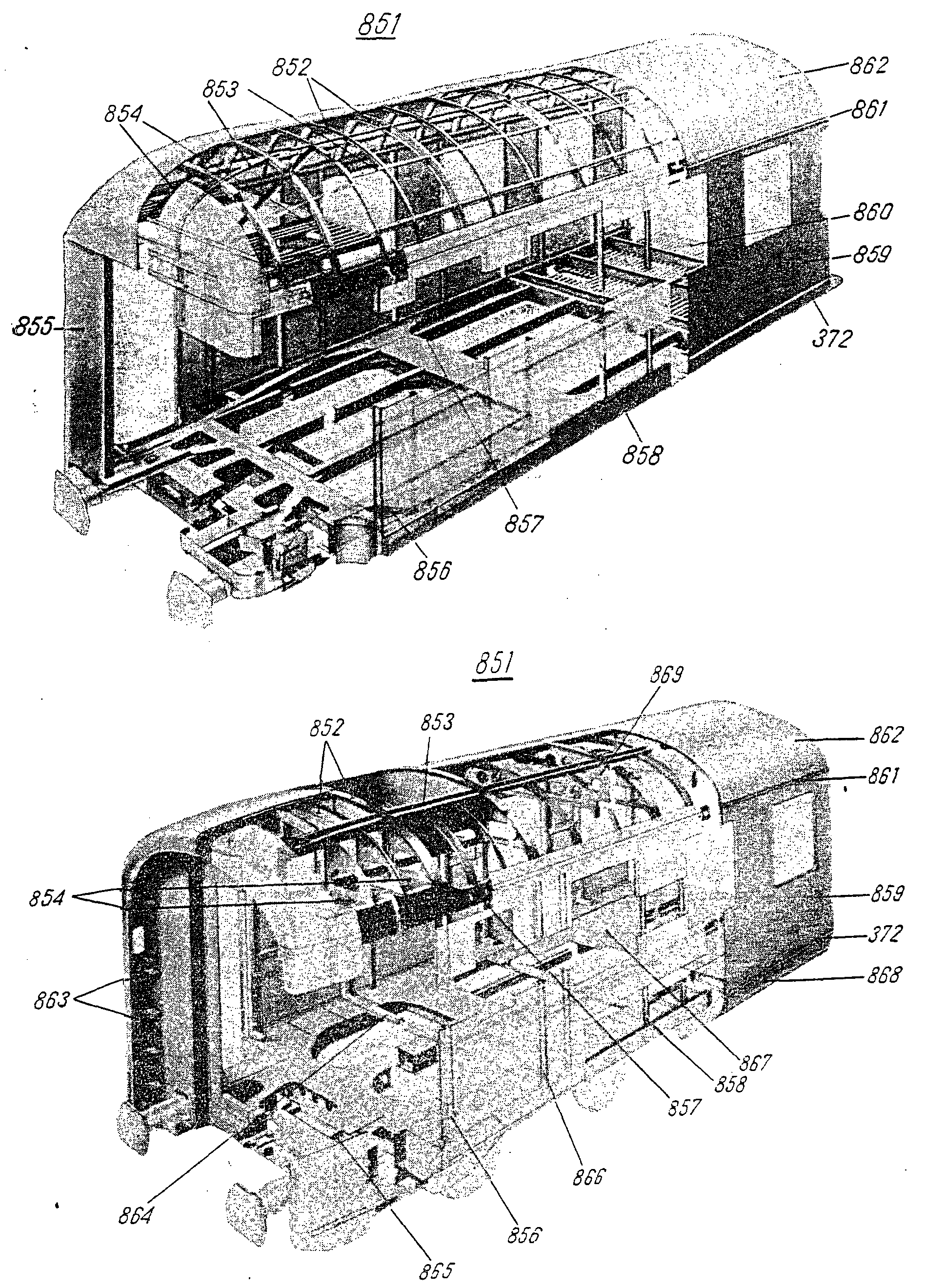 ,
,  —FRA couvre-joint m de riveITA coprigiunto m di estremitàPLN skrajnik m dachuRUS лист m карниза крышисм. поз. 999 на
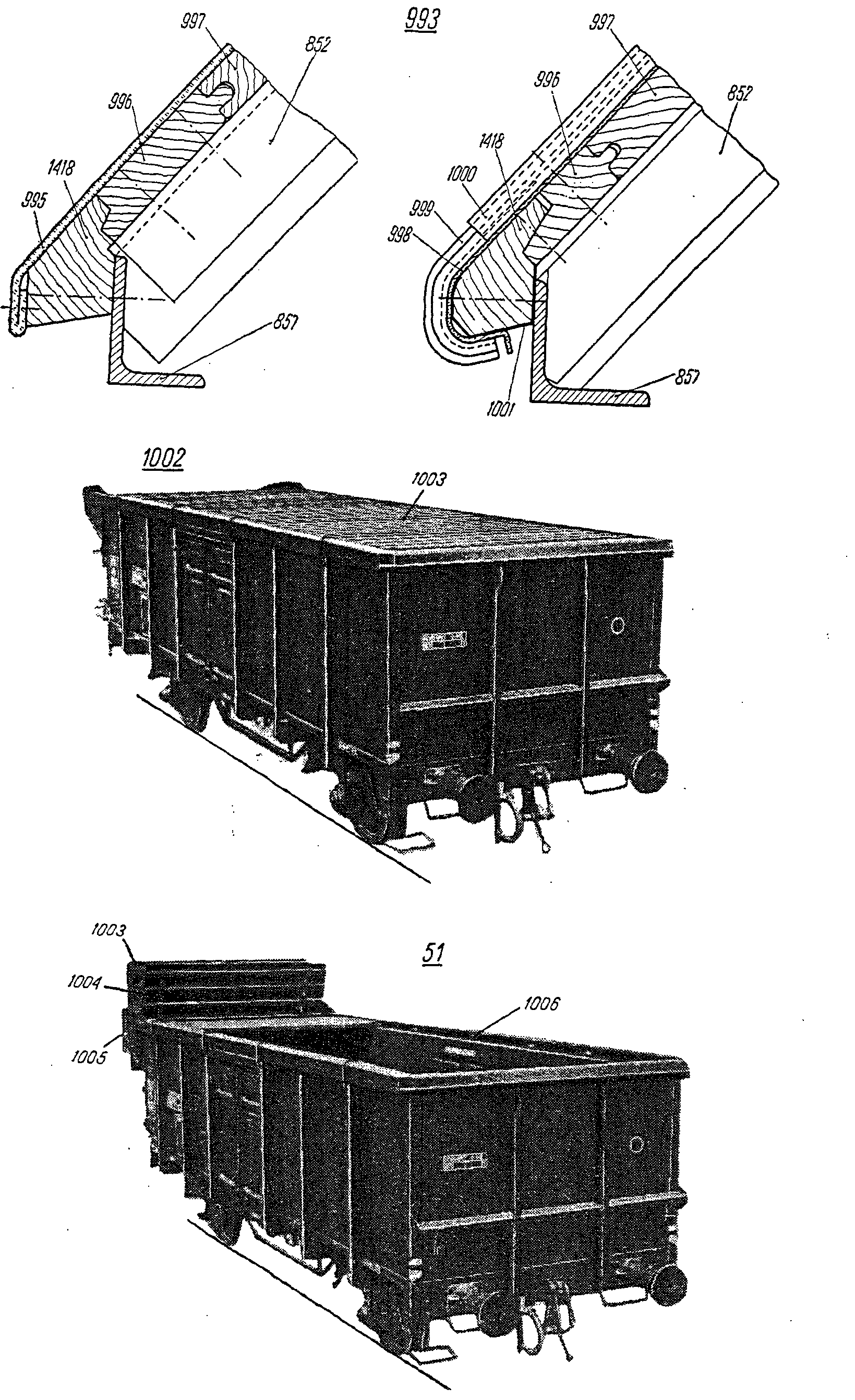 —FRA revêtement m de toitureDEU Dachdecke fENG roof coveringITA rivestimento m dell'imperialePLN pokrycie n dachuRUS лист m крышисм. поз. 995 на
лист крыши, алюминиевый
—FRA revêtement f de toiture (alliage léger)ITA rivestimento m dell'imperiale (lega leggera)PLN blacha f dachowa (alummiowa)RUS лист m крыши, алюминиевыйсм. поз. 998 на—FRA tôle f de cloison transversaleITA lamiera f di parete trasversalePLN blacha f ścianki działowejRUS лист m перегородкисм. поз. 883 на —FRA tôle-marchepied fDEU Trittblech nENG tread plateITA lamiera-pedana fPLN blacha f progowaRUS лист m подпоркисм. поз. 367 на
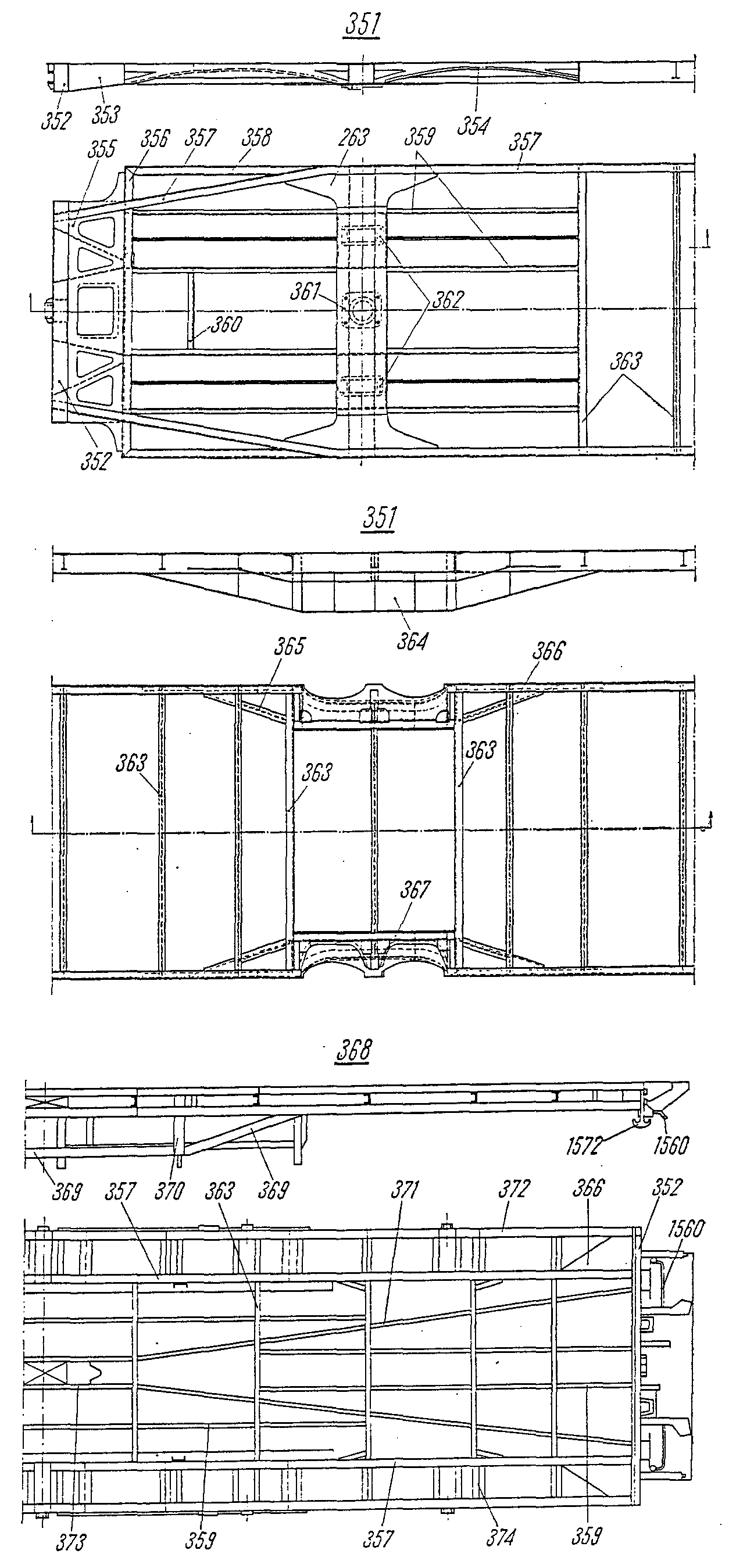 —FRA lame f de ressortDEU Federblatt nITA foglia f di molla a balestraPLN pióro ń sprężynyRUS лист m рессорныйсм. поз. 231 на
лист торцевой стены, облицовочный
—FRA panneau m de paroi de boutDEU Stirnwandblech nENG body end panelITA lamiera f della parete di testaRUS лист m торцевой стены, облицовочныйсм. поз. 855 налист, армировочный
—FRA armature fDEU Bewehrung fENG cover plateITA armatura fRUS лист m, армировочныйсм. поз. 1604 на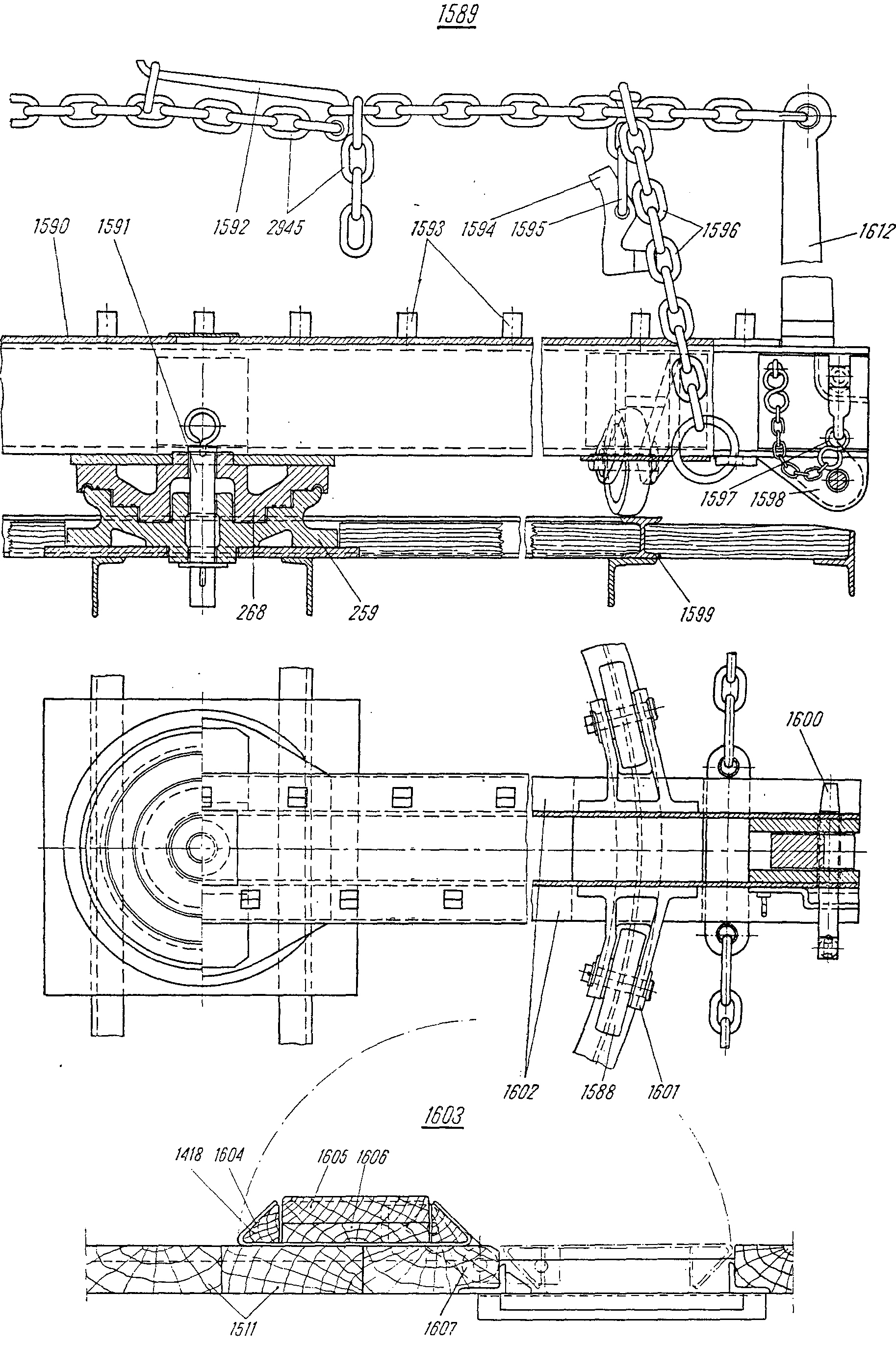
лист, коренной рессорный
—FRA lame f maîtresse de ressortITA foglia f maestra di - molla a balestraRUS лист m, коренной рессорныйсм. поз. 233 налист, кровельный
—FRA tôle f de toitureDEU Dachblech nITA lamiera f dell'imperialePLN blacha f poszyciowa dachuRUS лист m, кровельныйсм. поз. 862 на, 
лист, несущий
—FRA tôle-support fDEU Tragblech nENG stiffening plateITA lamiera f di supportoPLN blachownica fRUS лист m, несущийсм. поз. 364 налист, опорный
—FRA plaque f d’assemblageDEU Verbindungsplatte fENG bearing plateITA piastra f di collegamentoPLN płyta f górnaRUS лист m, опорныйсм. поз. 1590 налист, предохранительный
—FRA tôle f pare-étincellesDEU Schutzblech nENG spark arresterITA lamiera f parascintillePLN blacha f ochronnaRUS лист m, предохранительныйсм. поз. 354 на -
17 тяга
тяга сущ1. down-lock actuating rod2. pull 3. push 4. rod 5. thrust автоматическое флюгирование по отрицательной тягеdrag-actuated autofeatheringавтомат тяги1. autothrottle system(двигателя) 2. autothrottle автомат тяги в системе автопилотаautopilot auto throttleасимметричная тяга двигателейasymmetric engines powerвертикально направленная тягаupward thrustвключать реверс тягиdeploy a thrust reverserвоздушный винт прямой тягиdirect drive propellerвосстанавливать тягуregain thrustвспомогательные тягиauxiliariesвыключать реверс тягиstow a thrust reverserвыключение реверса тягиthrust brake retractionвысота уменьшения тягиcutback heightгермовывод тяги управленияcontrol rod pressure sealдатчик автомата тягиautothrottle transducerдатчик тягиthrust pickupдвигатель с пониженной тягойderated engineдвигаться за счет собственной тягиmove under own powerзамок реверса тягиreverser lockзамок створок реверса тягиreverser bucket lockзапас тягиthrust reserveзаход на посадку при симметричной тягеsymmetric thrust approachизбыток тяги двигателяengine thrust marginизбыточная тягаexcess thrustизмеритель тягиthrust meterистинная удельная тягаactual specific thrustковш реверса тягиthrust reverser bucketлиния тягиtrust axisмаксимальная тягаtop thrustмеханизм реверса тяги со струеотражательными заслонкамиtarget-type thrust reverserмомент тягиthrust momentнаконечник тягиrod end fittingнесимметричная реверсивная тягаasymmetrical reversal thrustнесимметричность тягиthrust misalignmentнулевая тягаzero thrustобеспечивать тягуprovide thrustобратная тяга1. backward thrust2. reversal thrust обратная тяга на режиме малого газаreverse idle thrustопора тягиlink rod supportосевая тягаaxial thrustотражатель в механизме реверса тягиpower reversal ejectorотрицательная тяга воздушного винтаpropeller dragпадение тягиthrust decayпереводить винт на отрицательную тягуreverse the propellerперекладка реверса на прямую тягуthrust reverser stowageпереключать на прямую тягуreturn to forward thrustполет с несимметричной тягой двигателейasymmetric flightполная прямая тягаfull forward thrustполная реверсивная тягаfull reverse thrustположительная тягаpositive thrustпосадка с асимметричной тягойasymmetric thrust landingпосадка с использованием реверса тягиreverse-thrust landingпотеря тяги при скольжении воздушного винтаairscrew slip lossпотребная тягаrequired thrustпривод механизма реверса тягиthrust reverser actuatorприменять реверс тягиapply reserves thrustпружинная тягаspring linkпрямая тягаforward thrustпрямая тяга на режиме малого газаforward idle thrustразвивать тягуdevelop thrustрасполагаемая тягаavailable thrustрасчетная тягаdesign thrustреактивная тягаjet thrustреверсивная тягаunwanted reverse thrustреверсировать тягуreverse thrustреверс основной тягиcore jet reversalреверс тягиthrust reversalрегулируемая тяга1. variable thrust2. controllable thrust режимная тягаoperating thrustрешетка реверса тягиthrust reverser cascadeрычаг управления реверсом тяги1. thrust reverser lever2. reverse thrust lever система реверсирования тягиthrust reverser systemсистема создания дополнительной вертикальной тягиaugmented systemсопло с реверсом тягиthrust-reverse nozzleсоставляющая силы тягиthrust componentстатическая тягаstatic thrustстворка механизма реверса тягиthrust reverser doorстопорение рулевой тягиcontrol-rod lockingсуммарная тяга1. resultant thrust2. combined thrust 3. overall thrust табло сигнализации положения реверса тягиthrust reverser lightторможение реверсом тягиthrust brakingтормозить отрицательной тягой винтаbrake by propeller dragтормозить реверсом тягиbrake by reverse thrustтормозная тягаbrake compensating rodтяга без потерьnet thrustтяга воздушного винта1. airscrew propulsion2. propeller thrust тяга в полетеflight thrustтяга двигателяengine thrustтяга на взлетном режимеtakeoff thrustтяга на максимально продолжительном режимеmaximum continuous thrustтяга на режиме максимального газаfull throttle thrustтяга на режиме малого газаidling thrustтяга на установившемся режимеsteady thrustтяга, необходимая для страгиванияbreak-away thrustтяга несущего винтаrotor thrustтяга осевой передачи усилийpush-pull rodтяга передачи тормозных усилийbrake tension rodтяга передачи усилийdrive rodтяга поперечного управленияlateral control rodтяга провольного управленияfore-aft control rodтяга продольного управленияlongitudinal control rodтяга, регулируемая по величине и направлениюvectored thrustтяга синхронизации закрылковflap interconnection rodтяга - толкательpush rodтяга - толкатель клапановvalve push rodтяга управление пружинным сервокомпенсаторомspring tab control rodтяга управления1. control rod2. linkage rod тяга управления общим шагомcollective pitch control rodтяга управления створкойdoor operating barтяга управления циклическим шагомcyclic pitch control rodудельная тягаspecific thrustудельный расход топлива на кг тяги в часthrust specific fuel consumptionуказатель реверса тягиthrust-reverse indicatorуменьшать тягуreduce thrustуменьшение тягиthrust reductionуменьшение тяги с целью снижения шумаnoise abatement thrust cutbackуменьшение шума за счет изменения тягиnoise thrust correctionустройство для создания тягиthrust producting deviceфорсажная камера для увеличения тягиthrust augmentorфорсирование тягиthrust augmentationфорсированная тягаaugmented thrustфорсировать тягуaugment thrustцапфа крепления тягиrod trunnionцилиндр реверса тягиthrust reverser cylinderшаг отрицательной тяги1. reverse pitch2. drag pitch шаг положительной тягиforward pitchшаг при отсутствии тяги1. zero-thrust pitch2. no-lift pitch шум при включении реверса тягиreverse thrust noiseэффект постоянной тягиconstant thrust effect -
18 элемент
cell, detail, device, (конструкции, машины, схемы) element, elementary unit, entry, (изображения, геометрической фигуры, топологии) feature, ( расчетной схемы) node, organ, ( данных) item вчт., (конструкции, машины, схемы, множества, массива) member, part, term, unit* * *элеме́нт м.1. (составная часть чего-л.) element, component2. ( химический источник тока) cell3. (устройство, прибор) device, unit; ( иногда) element4. мат. element, quantity; ( треугольника) part5. (списка выходов, макрокоманды) вчт. entryэлеме́нт аккумуля́торной батаре́и — storage(-battery) [accumulator] cellаккумуля́торный элеме́нт — storage(-battery) [accumulator] cellакти́вный элеме́нт — active element, active componentэлеме́нт аналити́ческой фу́нкции — element of an analytic functionана́логовый элеме́нт — analog elementэлеме́нт анте́нны — (aerial [antenna]) elementэлеме́нт анте́нны, акти́вный — radiating [directly excited] elementэлеме́нт анте́нны, пасси́вный — passive [parasitically excited] elementарми́рующий элеме́нт стр. — reinforcing elementбесконе́чно удалё́нные элеме́нты мат. — points at infinity, ideal pointsэлеме́нты букв, выступа́ющие — ascendersэлеме́нты букв, свиса́ющие — descendersэлеме́нт вероя́тности — probability elementэлеме́нт Весто́на — Weston standard cellэлеме́нт ви́хря — vortex elementвлагочувстви́тельный элеме́нт — humidity-sensitive elementвоспринима́ющий элеме́нт — sensing element, sensorвоспринима́ющий, опти́ческий элеме́нт — optical sensorвходно́й элеме́нт — input elementэлеме́нт вы́борки — sample unitэлеме́нт вы́борочного пла́на мат. — plotвыходно́й элеме́нт — output elementэлеме́нт вычисли́тельной маши́ны — computer elementвычисли́тельный элеме́нт — computer element; ( в аналоговой технике) computing elementгальвани́ческий элеме́нт — galvanic cellгальвани́ческий, возду́шно-ци́нковый элеме́нт — air-zinc cellгальвани́ческий, га́зовый элеме́нт — gas cellгальвани́ческий, контро́льный элеме́нт — pilot cellгальвани́ческий, концево́й элеме́нт — end cellгальвани́ческий, концентрацио́нный элеме́нт — concentration cellгальвани́ческий, необрати́мый элеме́нт — irreversible cellгальвани́ческий, обрати́мый элеме́нт — reversible cellгальвани́ческий, перви́чный элеме́нт — primary cellгальвани́ческий, у́гольный элеме́нт — carbon cellгистере́зисный элеме́нт — hysteretic elementэлеме́нт гла́вной диагона́ли определи́теля мат. — leading element in a determinantэлеме́нт да́нных — data element, data itemдвои́чный элеме́нт вчт. — binary cellдвухпозицио́нный элеме́нт вчт., элк. — two-position [two-stable state] elementдискре́тный элеме́нт — discrete element, discrete componentдоче́рний элеме́нт физ. — daughter elementэлеме́нт жи́дкости — fluid elementжи́дкостный элеме́нт — wet cellэлеме́нт заде́ржки — delay elementэлеме́нт запомина́ющего устро́йства — storage [memory] elementзапомина́ющий элеме́нт — storage [memory] element, storage [memory] cell (Не путать с яче́йкой па́мяти. Not to be confused with storage register, storage location)запомина́ющий элеме́нт нахо́дится в (состоя́нии) «0» или «1» — the storage [memory] cell is in a “0” or a “1” stateустана́вливать запомина́ющий элеме́нт в (состоя́ние) «0» или «1» — set the storage [memory] cell to a “0” or “1” stateзвукоизлуча́ющий элеме́нт — acoustic radiating elementзвукоприё́мный элеме́нт — sound pick-up elementэлеме́нт И — AND elementизбы́точный элеме́нт — redundant elementизмери́тельный элеме́нт — measuring elementэлеме́нт изображе́ния тлв. — picture element, elemental areaэлеме́нт ИЛИ — OR elementиммерсио́нный элеме́нт ( полупроводникового фотоприёмника) — immersion elementи́мпульсный элеме́нт автмт. — samplerинверти́рующий элеме́нт — inverting elementинтегра́льный элеме́нт элк. — integrated (circuit) elementисхо́дный элеме́нт физ. — parent element; original elementкоммутацио́нный элеме́нт элк. — switching elementэлеме́нт констру́кции стр. — memberэлеме́нт констру́кции, несу́щий — bearing memberэлеме́нт констру́кции, попере́чный — cross memberэлеме́нт констру́кции, продо́льный — longitudinal memberэлеме́нт констру́кции, рабо́тающий на изги́б — member in bendingэлеме́нт констру́кции, рабо́тающий на круче́ние — member in torsionэлеме́нт констру́кции, рабо́тающий на растяже́ние — member in tensionэлеме́нт констру́кции, рабо́тающий на сжа́тие — compressional member, (compression) strutэлеме́нт констру́кции, рабо́тающий на срез — member in shearэлеме́нт констру́кции, уси́ливающий — reinforcing member, stiffenerконта́ктный элеме́нт эл. — contact element, contact electrodeкриоге́нный элеме́нт — cryogenic elementлеги́рующий элеме́нт1. метал. alloying element2. полупр. doping elementлоги́ческий элеме́нт ( ЦВМ) — logic element, gateнабо́р логи́ческих элеме́нтов облада́ет функциона́льной полното́й — the set of gates is functionally completeлоги́ческий, запомина́ющий элеме́нт — storage [memory, sequential] elementлоги́ческий элеме́нт И — AND gate, AND circuitлоги́ческий элеме́нт ИЛИ — OR gate, OR circuitлоги́ческий элеме́нт ИЛИ-НЕ — NOR gate, NOR circuitлоги́ческий элеме́нт И-НЕ — NAND gate, NAND circuitлоги́ческий, комбинацио́нный элеме́нт — combinational [decision, memoryless] element, gateлоги́ческий, мажорита́рный элеме́нт — majority (logic) elementлоги́ческий, микроминиатю́рный (мо́дульный) элеме́нт — micrologic elementлоги́ческий элеме́нт НЕ — NOT [inverter] gate, NOT [inverter] circuitлоги́ческий, поро́говый элеме́нт — threshold elementлоги́ческий, реша́ющий элеме́нт — decision [memoryless, combinational] element, gateвыходно́й сигна́л реша́ющего логи́ческого элеме́нта определя́ется комбина́цией входны́х сигна́лов — the output of a decision element is produced by a combination of inputsмагни́тный элеме́нт — magnetic elementмагни́тный, многоды́рочный элеме́нт — magnetic multiaperture elementэлеме́нт ма́ссы — element of massматери́нский элеме́нт физ. — parent elementма́тричный элеме́нт мат. — matrix element, element of a matrixме́стный элеме́нт — local (galvanic) callэлеме́нт микросхе́мы — integrated-circuit [IC] elementэлеме́нт мише́ни ( в ЭЛТ) — target elementмо́крый элеме́нт — wet cellмонокристалли́ческий элеме́нт — single-crystal elementнавесно́й элеме́нт элк. — interconnection [discrete interconnected] componentнагрева́тельный элеме́нт — heating elementэлеме́нт на твё́рдом те́ле — solid-state elementневзаи́мный элеме́нт — nonreciprocal [unidirectional] elementнелине́йный элеме́нт — non-linear elementнерабо́чий элеме́нт вчт. — inactive entryнесо́бственные элеме́нты мат. — points at infinity, ideal pointsнорма́льный элеме́нт ( как мера эдс) — standard cellнорма́льный, насы́щенный элеме́нт — saturated standard cellнорма́льный, ненасы́щенный элеме́нт — unsaturated standard cellобра́тный элеме́нт мат. — inverseэлеме́нт объё́ма мат. — volume element, element [differential] of volume, cellопо́рный элеме́нт ( отсчёта или сравнения) — reference elementоптикоэлектро́нный элеме́нт — optoelectronic elementопти́ческий элеме́нт автомоби́льной фа́ры — (lamp) sealed-beam unit, headlamp insertопти́ческий, реле́йный элеме́нт — photorelay, photoelectric [light] relay, photo-switchэлеме́нты орби́ты — elements of an orbitпараметри́ческий элеме́нт элк. — parametric elementпеча́тающие элеме́нты полигр. — printing areasпеча́тный элеме́нт вчт. — printed componentплё́ночный элеме́нт элк. — (thin-)film componentэлеме́нт пове́рхности мат. — surface elementпоглоща́ющий элеме́нт элк. — dissipative elementэлеме́нт подве́ски — spring unitэлеме́нт подве́ски, упру́гий — springing mediumполоско́вый элеме́нт элк. — strip elementпри́месный элеме́нт полупр. — impurity elementпробе́льный элеме́нт полигр. — spacing materialэлеме́нт, рабо́тающий в преде́льном режи́ме элк. — marginal componentразвё́ртывающий элеме́нт тлв. — picture element, elemental areaвыделя́ть развё́ртывающий элеме́нт на передава́емом изображе́нии ( в фототелеграфе) — scan the subject-copyэлеме́нт ра́стра тлв. — picture element, elemental areaра́стровый элеме́нт тлв. — picture element, elemental areaрезе́рвный элеме́нт т. над. — redundant elementэлеме́нт свя́зи радио, элк. — coupling elementсвязу́ющий элеме́нт хим. — binderсегнетоэлектри́ческий элеме́нт — ferroelectric elementэлеме́нт с жи́дким электроли́том — wet cellсилово́й элеме́нт1. маш. load-bearing element2. стр. load-bearing memberэлеме́нт следя́щей систе́мы автмт. — servo elementсо́лнечный элеме́нт — solar cellсо́лнечный, кре́мниевый элеме́нт — silicon solar cellсо́лнечный, тонкоплё́ночный элеме́нт — thin-film solar cellсопряжё́нный элеме́нт мат. — transformстру́йный элеме́нт автмт. — fluidic elementсумми́рующий элеме́нт вчт. — adding elementсухо́й элеме́нт — dry cellэлеме́нты сфери́ческого треуго́льника — circular partsэлеме́нты сфе́ры мат. — median section; goreсхе́мный элеме́нт — circuit elementтепловыделя́ющий элеме́нт ( реактора) — fuel elementтермоэлектри́ческий элеме́нт — thermocouple, thermojunction (см. тж. термопара)ти́тульные элеме́нты кни́ги — front matterтонкоплё́ночный элеме́нт — thin-film componentто́пливный элеме́нт — fuel cellэлеме́нт траекто́рии астр., косм. — elements of a trajectoryуправля́емый элеме́нт автмт. — controlled elementуправля́ющий элеме́нт автмт. — control elementферри́товый элеме́нт — ferrite elementферри́товый, разветвлё́нный элеме́нт — multipath ferrite structureферромагни́тный элеме́нт — ferromagnetic elementфильтру́ющий элеме́нт — filter elementфильтру́ющий, во́йлочный элеме́нт — felt filter elementэлеме́нт форма́та ( данных) вчт. — format itemфотовольтаи́ческий элеме́нт — photovoltaic cellфотогальвани́ческий элеме́нт — photovoltaic cellфотохими́ческий элеме́нт — photochemical cellфотоэлектри́ческий элеме́нт — photocell, photoelectric cellфункциона́льный элеме́нт элк. — functional elementхими́ческий элеме́нт — chemical elementхими́ческий, лё́гкий элеме́нт — light elementхими́ческий, радиоакти́вный элеме́нт — radioactive elementхими́ческий, редкоземе́льный элеме́нт — rare earth elementхими́ческий элеме́нт с больши́м а́томным но́мером — high-Z elementхими́ческий элеме́нт с ма́лым а́томным но́мером — low-Z elementхими́ческий, трансура́новый элеме́нт — transuranium elementхими́ческий, тяжё́лый элеме́нт — heavy elementэлеме́нт це́пи — circuit elementчувстви́тельный элеме́нт — sensing element, sensorэлектролити́ческий элеме́нт — electrolytic cellэлектронагрева́тельный элеме́нт — electric heating elementэлектронагрева́тельный, тру́бчатый элеме́нт — tubular electric heating element -
19 затопить
I совII совзатопть пе́чку — light up the stove
overflow [-flou], floodэ́той весно́й река́ затопи́ла всю дере́вню — this spring the river flooded the entire village
-
20 лёгкий на ногу
лёгкий (лёгок, скор, скорый) на ногуразг.light on one's feet; briskВесной, в начале сева, в Быстрянке появился новый парень - шофёр Пашка Холманский. Сухой, жилистый, лёгкий на ногу. (В. Шукшин, Классный водитель) — That spring, when sowing time came round, a new lad, driver Pashka Kholmansky, arrived in Bystryanka. Lean, wiry, light on his feet.
См. также в других словарях:
Spring bud — is the color that used to be called spring green before the web color spring green was invented in the 1990s.This color is now called spring bud to avoid confusion with the web color.pring Budinfobox color title=Spring Bud|textcolor=black… … Wikipedia
Spring green (color) — Spring green is a color that is the color on the color wheel that is precisely halfway between cyan and green. When plotted on the CIE chromaticity diagram it corresponds to a visual stimulus of 505 nanometers on the visible spectrum. Spring… … Wikipedia
Spring — (spr[i^]ng), v. i. [imp. {Sprang} (spr[a^]ng) or {Sprung} (spr[u^]ng); p. p. {Sprung}; p. pr. & vb. n. {Springing}.] [AS. springan; akin to D. & G. springen, OS. & OHG. springan, Icel. & Sw. springa, Dan. springe; cf. Gr. spe rchesqai to hasten.… … The Collaborative International Dictionary of English
Light — (l[imac]t), n. [OE. light, liht, AS. le[ o]ht; akin to OS. lioht, D. & G. licht, OHG. lioht, Goth. liuha[thorn], Icel. lj[=o]s, L. lux light, lucere to shine, Gr. leyko s white, Skr. ruc to shine. [root]122. Cf. {Lucid}, {Lunar}, {Luminous},… … The Collaborative International Dictionary of English
Light ball — Light Light (l[imac]t), n. [OE. light, liht, AS. le[ o]ht; akin to OS. lioht, D. & G. licht, OHG. lioht, Goth. liuha[thorn], Icel. lj[=o]s, L. lux light, lucere to shine, Gr. leyko s white, Skr. ruc to shine. [root]122. Cf. {Lucid}, {Lunar},… … The Collaborative International Dictionary of English
Light barrel — Light Light (l[imac]t), n. [OE. light, liht, AS. le[ o]ht; akin to OS. lioht, D. & G. licht, OHG. lioht, Goth. liuha[thorn], Icel. lj[=o]s, L. lux light, lucere to shine, Gr. leyko s white, Skr. ruc to shine. [root]122. Cf. {Lucid}, {Lunar},… … The Collaborative International Dictionary of English
Light dues — Light Light (l[imac]t), n. [OE. light, liht, AS. le[ o]ht; akin to OS. lioht, D. & G. licht, OHG. lioht, Goth. liuha[thorn], Icel. lj[=o]s, L. lux light, lucere to shine, Gr. leyko s white, Skr. ruc to shine. [root]122. Cf. {Lucid}, {Lunar},… … The Collaborative International Dictionary of English
Light iron — Light Light (l[imac]t), n. [OE. light, liht, AS. le[ o]ht; akin to OS. lioht, D. & G. licht, OHG. lioht, Goth. liuha[thorn], Icel. lj[=o]s, L. lux light, lucere to shine, Gr. leyko s white, Skr. ruc to shine. [root]122. Cf. {Lucid}, {Lunar},… … The Collaborative International Dictionary of English
Light keeper — Light Light (l[imac]t), n. [OE. light, liht, AS. le[ o]ht; akin to OS. lioht, D. & G. licht, OHG. lioht, Goth. liuha[thorn], Icel. lj[=o]s, L. lux light, lucere to shine, Gr. leyko s white, Skr. ruc to shine. [root]122. Cf. {Lucid}, {Lunar},… … The Collaborative International Dictionary of English
Light money — Light Light (l[imac]t), n. [OE. light, liht, AS. le[ o]ht; akin to OS. lioht, D. & G. licht, OHG. lioht, Goth. liuha[thorn], Icel. lj[=o]s, L. lux light, lucere to shine, Gr. leyko s white, Skr. ruc to shine. [root]122. Cf. {Lucid}, {Lunar},… … The Collaborative International Dictionary of English
Light at the End — is a 2007 studio album by the Portland, Maine band Rustic Overtones, the first album put out by the band since its break up in 2002. The album was recorded in the spring of 2007, released on July 24th, 2007 [http://www.bullmoose.com/rel/v2… … Wikipedia
